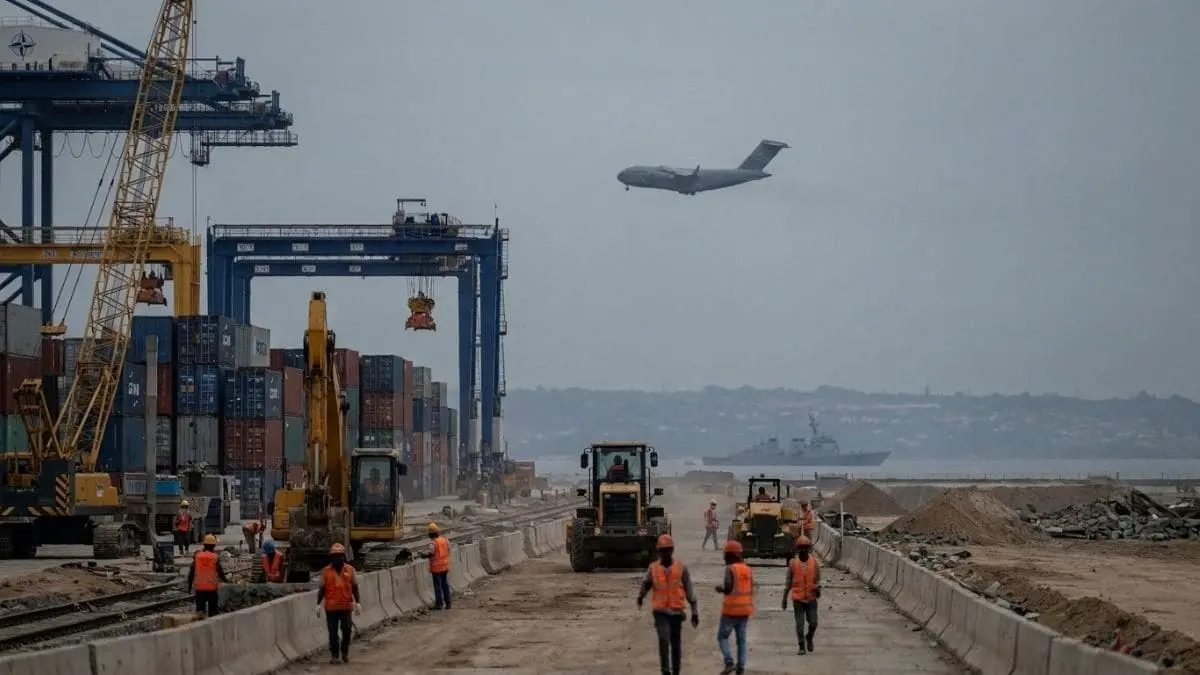
America Defends Old World; China Designs New

⏱️ 4 Mins Read
There is a recurring asymmetry in the shifting balance of power in the world. While the modern relations between China and US have been defined by reactive crisis management in Washington, Beijing is proactively constructing new China spheres of influence through long-term economic architecture. This is the central contest of great power economics in the 21st century.
The Historical Templatei
When the United States committed over $2 trillion and two decades of strategic attention to Afghanistan and Iraq after 2001, China was finishing its accession to the World Trade Organization, launching its “Going Out” foreign investment strategy, and systematically building commodity supply relationships across Africa and Latin America. The US was not passive during this period; it was intensely engaged in crisis management.
The 2008 financial crisis produced the same dynamic. While the US directed its political and financial capital toward domestic stabilization and the management of systemic bank failures, China deployed its fiscal stimulus, in part, through overseas infrastructure contracts and used the crisis window to deepen manufacturing dependencies across the Global South. The US preserved the existing order. China expanded its position within the successor state.
The COVID-19 pandemic extended the pattern. While the United States managed domestic supply chain crises and vaccine distribution conflicts, China maintained export capacity and deepened trade ties and infrastructure ownership positions across Southeast Asia, Africa, and Latin America.
These are not coincidences, but a predictable output of two different horizons. A democracy operating on four-year electoral cycles will consistently prioritize immediate crisis management over long-term economic architecture. A state that plans in generational increments will consistently use those crisis windows to extend its structural position.
The Current Instantiation
The US-Israel military operations against Iran in 2026 follow the same structural logic. Estimates of direct US military expenditure place the cost at approximately one billion dollars per day, mounting significant fiscal pressure at a moment when elevated energy prices from Hormuz disruption are already straining the national economic outlook.
The strategic attention the conflict demands is the more consequential cost. While US policymakers focus on carrier strike group positioning, corridor management in the Persian Gulf, and the political economy of oil prices, China is extending its economic role precisely in the regions receiving no institutional attention from the US.
The Latin American Pivot
The Latin American dimension of China’s expansion represents the most direct challenge to the strategy the United States has maintained for two centuries, and it is occurring with minimal American institutional response.
BYD and Changan are two leading Chinese automotive manufacturers. They have established production facilities in Brazil and export vehicles assembled there to Argentina and Mexico. It is a deliberate strategy to leverage Brazilian trade ties and production origins to access markets that would otherwise impose impediments on China-origin goods.
The same vertical integration model driving BYD’s Brazilian expansion is also undermining Europe’s tariff defenses, proving the strategy is not regional opportunism but a systematic playbook executed across every market.
The latest front of that playbook is now forcing a trans-Channel regulatory crisis, with Brussels pressuring the UK to match its 45.3% Chinese EV tariff or lose access to Made in Europe supply chains.
Yuan-denominated soybean transactions between China and Brazil have reached approximately $80 billion annually, building transaction infrastructure that functions independently of dollar-based clearing.
Brazil’s digital currency (DREX) is anticipated to achieve interoperability with the digital yuan in the near term, creating a bilateral payment corridor that bypasses SWIFT. A China-Brazil joint investment fund has driven an 113 percent increase in Beijing’s FDI into Brazil over the relevant period. No comparable US investment growth in Brazil was recorded over the same timeframe.
Chipping Away at Taipei
Taiwan’s diplomatic situation illustrates China’s calculated patience at its most precise. Paraguay remains the last country in South America to maintain formal diplomatic relations with Taipei rather than Beijing.
China offers Paraguayan officials access to Chinese markets, investment, and development partnerships, versus the symbolic benefits of being associated with a diplomatically isolated government. This economic argument grows more compelling as China’s regional economic weight increases.
Chinese diplomatic cultivation of Paraguayan political figures, including sponsored visits to Chinese cities to highlight the economic opportunity cost of the Taiwan relationship, represents one dimension of a systematic campaign spanning multiple countries and political cycles. The mechanism is economic leverage, not military coercion, which makes it harder to counter and easier to sustain.
The consequences extend well beyond the bilateral relationship. Taiwan’s semiconductor manufacturing, concentrated in TSMC, which holds approximately two-thirds of the global foundry market and near-exclusive control at the most advanced production nodes, sits at the center of every major technology supply chain. The semiconductor consequences of Taipei’s diplomatic isolation are the most underpriced risk in global markets today.
Reversing History: Modern China Spheres of Influence
In the 19th century, foreign powers carved up the map to establish imperial spheres of influence in China. Today, the structural pattern of great power economics has entirely reversed.
Through the Belt and Road Initiative, digital currency corridors, and port ownership, Beijing is methodically building new China spheres of influence across the Global South.
Unlike the military coercion of the old world order, this modern expansion relies on economic integration, supply chain dependencies, and infrastructure investments that set aside traditional Western institutions.
How Big is China Compared to the US in Economic Footprint?
When analyzing how big is China compared to the US, the question is no longer just about territorial size such as asking is the U.S. bigger than China, but about generational infrastructure capture.
China’s Belt and Road Initiative has deployed approximately $1.4 trillion across 150 countries since its inception in 2013, creating maintenance dependencies, operational leverage, and sovereign relationships that outlast short-term political cycles.
Ports, roads, energy facilities, and digital networks built under BRI agreements create maintenance dependencies, operational leverage, and political relationships that outlast the construction phase.
The infrastructure exists independently of any particular diplomatic relationship. Ownership and operational knowledge stay with Chinese entities regardless of the political climate at any given moment.
China’s control of energy infrastructure inside Western supply chains represents a second front that receives far less analytical attention than the primary investment figures suggest it deserves.
The Strait as a Financial Weapon
Since the Iran-US war began on February 28, 2026, the global Strait of Hormuz closure impact has allowed Iran to convert the contested waterway into a functioning toll regime.
Ships from China, Russia, India, Iraq, and Pakistan receive free passage by nationality. Vessels from other countries, including those linked to the US or Israel, must pay a toll settled in Chinese yuan or stablecoins, with fees ranging from roughly $1 per barrel to $2 million per transit, depending on cargo and routing. At least two vessels have completed yuan-denominated transits, one arranged through a Chinese maritime services firm. Iran’s parliament has moved to formalize the arrangement through a Strait of Hormuz Management Plan, though it still requires full legislative approval.
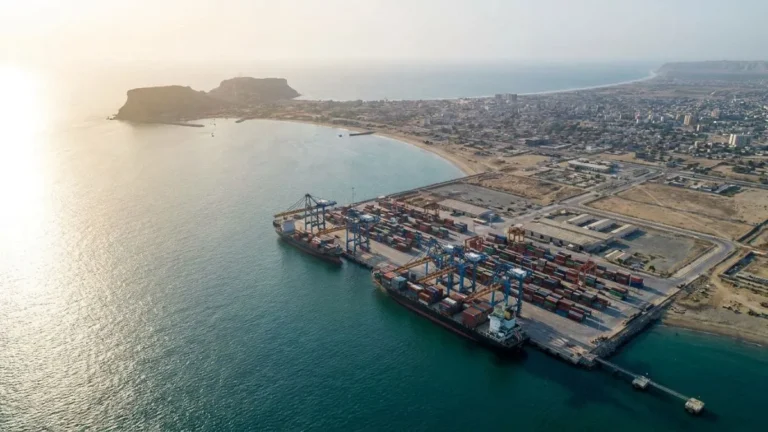
The immediate business consequences of that weapon rerouted shipping, new transit fees, and Pakistan’s unexpected emergence as a transshipment hub are already reshaping Asian trade architecture.
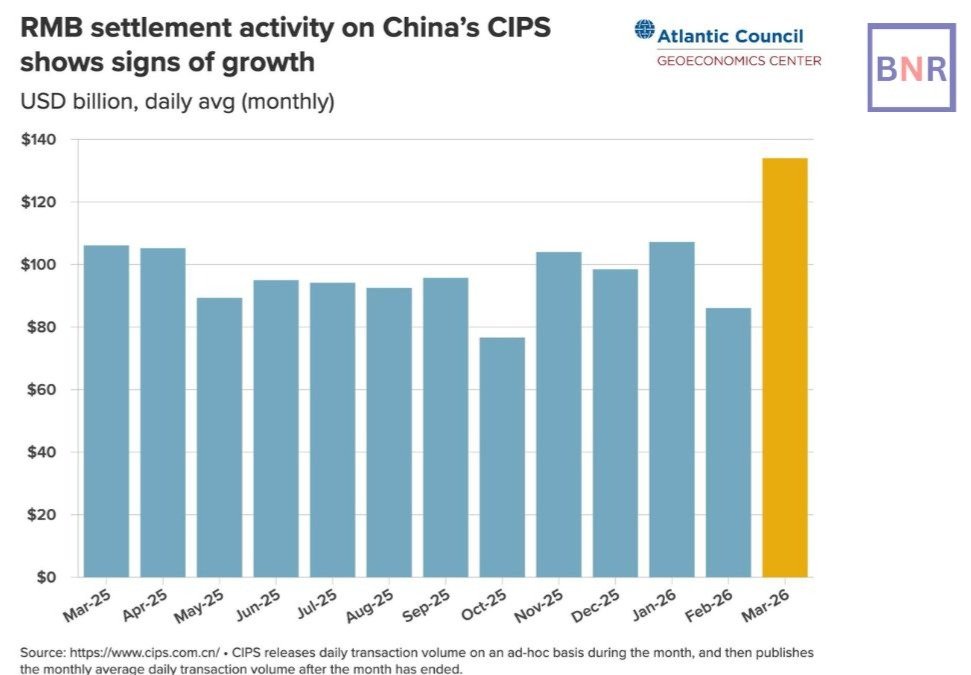
China’s Cross-Border Interbank Payment System, the renminbi clearing network that has been steadily expanding for years, saw daily transaction volumes rise from roughly $85–105 billion to over $130 billion per day in the weeks after the war began, according to an Atlantic Council analysis.
Iran’s toll regime and China’s currency-internationalization interests are currently aligned and mutually reinforcing. China benefits from yuan internationalization regardless of Iranian strategy; Iran benefits from sanctions evasion regardless of Chinese intent. Shared interest is not the same as direction from Beijing, and current reporting provides no evidence of the latter.
Meanwhile, Washington’s strategic response to Iran’s toll regime is not just military; it is a $10 billion infrastructure fund with Arab allies designed to permanently bypass Hormuz and make the toll question irrelevant.
The BRICS Factor and the Petrodollar Question
The most consequential dimension of China’s expansion is currency architecture. The US dollar’s status as the global reserve currency underpins American foreign policy power. Dollar dominance is what makes financial sanctions effective. Countries fear SWIFT exclusion because they denominate trade in dollars.
Iran, Egypt, Ethiopia, Indonesia, the UAE, and others have joined BRICS, a group of emerging economies that are now intensely exploring alternatives to dollar-denominated trade settlement. Saudi Arabia has so far remained outside formal BRICS membership, carefully preserving relationships with both Washington and Beijing. This stance cannot be sustained indefinitely as the two poles of global economic competition become more incompatible.
Who Are the China Allies in the New Economic Order?
When asked who the China allies are, the answer differs fundamentally from that of Western mutual defense treaties.
Rather than traditional military alliances, key China allies and strategic partners are bound by trade architecture, bilateral currency-clearing corridors (bypassing SWIFT), and ownership of critical infrastructure across Latin America, Central Asia, and the expanding BRICS bloc.
The Global South is Choosing
Nations across the Global South are not making ideological choices between Washington and Beijing. They are making rational economic decisions based on available options, institutional reliability, and the terms being offered.
China offers infrastructure investment, manufacturing partnerships, and trade denominated in currencies that do not expose recipient countries to secondary-sanctions risk. The US offers security guarantees and market access. Both of which have become less predictable. Security guarantees call for sustained American attention that ongoing conflicts divert.
In East Asia, that distraction is already producing measurable consequences. Trump’s decision to scale back US-South Korea military drills without consulting Seoul opened the door for China’s top diplomat to arrive in Seoul days later with an economic and diplomatic alternative.
In South Asia, Pakistan has risen from a financially distressed state to a US-Iran mediator and Makkah Pact anchor, while India remains on the sidelines of regional geopolitics, watching the realignment.
The most consequential European response to that erosion of American reliability is now unfolding not in trade policy but in nuclear deterrence. Germany is publicly training alongside French nuclear-capable aircraft for the first time in history.
Market access is complicated by tariff policy uncertainty that has damaged US credibility as a dependable trading partner.
Europe holds a significant economic advantage over both Washington and Beijing and has been conspicuously absent from this contest. The capacity to offer a third option, comprising economic weight, institutional trustworthiness, and no military entanglement in the current Gulf conflict, remains largely unmobilized. The window for European economic statecraft in the Global South is open but historically underutilized.
From Paraguay to Pakistan, from Nigeria to Indonesia, the rational economic calculation increasingly favors Chinese engagement in specific asset classes for investment and trade, even among countries that maintain security ties with the United States.
The domestic institutional failures that make these economies vulnerable to Chinese economic capture and the reasons they consistently fail to convert their own leverage into sovereign wealth are examined in The Middle Power Trap.
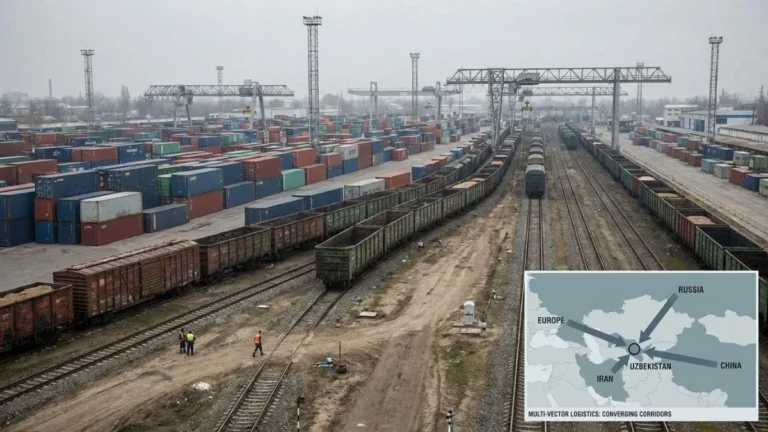
Nowhere is this calculation more visible than in Central Asia, where Kazakhstan, Azerbaijan, and Uzbekistan are simultaneously deepening ties with China and Russia while competing for European institutional endorsement, each converting the same great-power rivalry into corridor infrastructure that will outlast the current crisis.
The Long Game
The Iran conflict has reached an agreement. The Strait of Hormuz is now reopened. Oil prices are now falling. But the yuan-settlement infrastructure built in this period will still be running. The manufacturing facilities established across Latin America will continue to operate. The BRI ownership positions will still be in place. The diplomatic relationships cultivated across the Global South will still exist.
None of these outcomes requires China to defeat the United States in military competition. They require only that the United States keep reactivating crisis management instead of proactive economic architecture. This pattern has persisted with extraordinary consistency for more than two decades.
Beijing is not creating this opportunity. It is recognizing it and executing on it with the discipline of a state that plans in decades, not electoral cycles. The world’s reserve currency is not exactly a source of American prestige; it is the mechanism through which American foreign policy power operates. The structural work of undermining that mechanism is being done through alternatives. The war captures the attention. The alternatives capture the future.
One among those alternatives, the growing AI infrastructure race, is where the next phase of this competition is being decided, as the United States and China treat compute capacity as a sovereign asset with the same strategic urgency once reserved for oil fields and shipping lanes.
The real fight for AI’s future will be decided by who controls the power plants, the fabs, and the silicon pipelines that feed them.
Read more analysis in our Great Power Economics section.