E-Fuel was a Climate Argument. Hormuz Made It War

⏱️ 5 Mins Read
The Strait of Hormuz closure impact didn’t just suspend global fuel supply; it also reignited the debate over the e-fuel transition. When Iran blocked the world’s most critical maritime chokepoint on February 28, 2026, the closure of the Strait of Hormuz mirrored the broader regional vulnerabilities seen during recent drone strikes on cloud infrastructure, making discussions about reducing fossil fuel dependency urgent overnight.
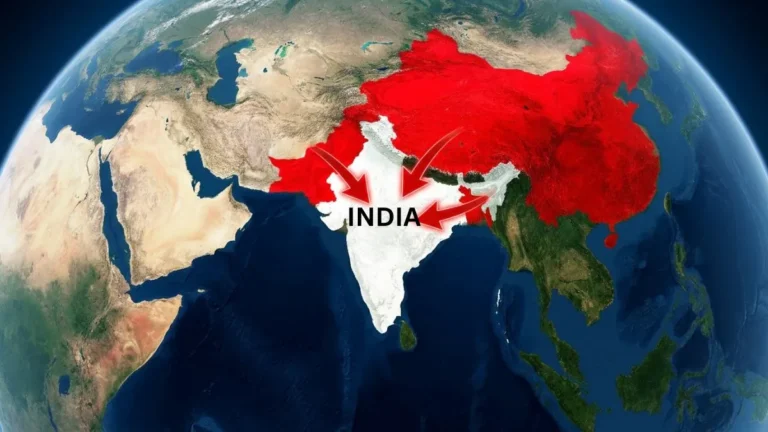
This energy security shock is one consequence of the great power economic competition that has simultaneously closed shipping corridors, redirected global trade flows, and accelerated technology decoupling across every major market.
What is e-Fuel and the E-Methanol Market?
The concept is simple. Take green hydrogen produced by splitting water with renewable electricity and combine it with carbon dioxide captured either from the air or from industry. Then combine these two ingredients in a pressurized reactor and apply heat and a copper-zinc catalyst.
What emerges is methanol, a clear, stable liquid fuel that can power ships and aircraft engines. It can be stored in tanks and transported through existing infrastructure with minimal modification.
When evaluating the e-methanol market, it is crucial to understand that, when this fuel is burned, there is no net addition of new carbon to the atmosphere, despite CO₂ emissions, because the carbon was captured before synthesis, either from the atmosphere or from biological sources.
Europe’s Billion-Dollar Bet: What is FuelEU Maritime?
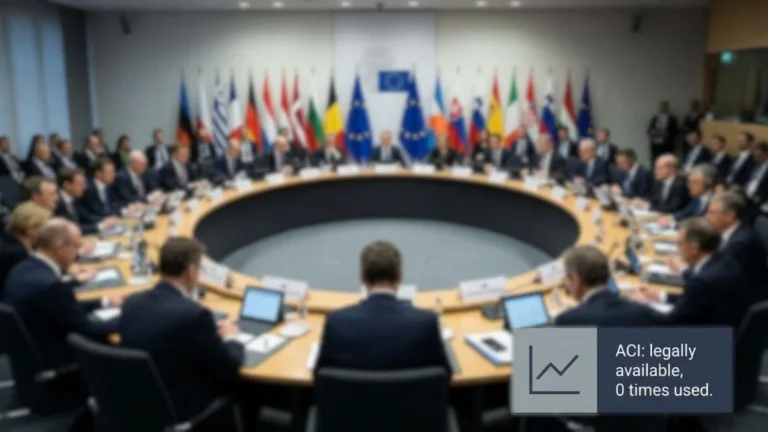
The European Union’s regulation on e-fuel has shown its ambition. In the aviation sector, the EU introduced the ReFuelEU initiative, which mandates that the use of sustainable aviation fuel increase from 2% in 2025 to 70% by 2050.
Similarly, in the maritime sector, investors and shipping lines frequently ask what is FuelEU maritime and how it affects their bottom line.
This regulation transforms shipping companies from potential green-fuel customers into legally obligated ones by setting strict greenhouse gas intensity limits for every vessel docking at an EU port and targeting 10 million tons of domestic renewable hydrogen by 2030.
Germany alone committed billions to hydrogen infrastructure. Denmark has already commissioned the first commercial-scale e-methanol plants. Major shipping lines have also ordered dual-fuel vessels and signed long-term green methanol commitments.
The market response has been overwhelming. Europe’s renewable methanol sector, which produced not more than 104,000 tons in 2024, is projected to grow by nearly 48 percent over the next 10 years, potentially exceeding five million tons annual production by 2034.
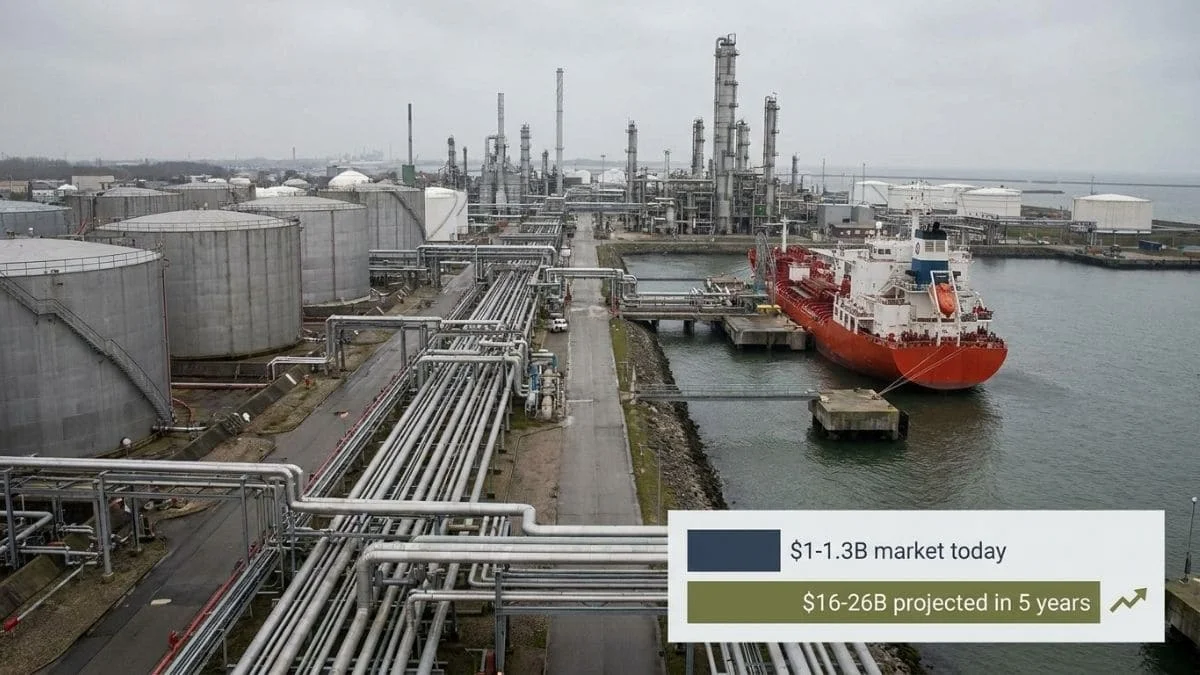
The global e-methanol market, currently valued at approximately $1-$1.3 billion, is expected to reach $16-$26 billion over the next five years.
“The Hormuz closure changed the conversation in every boardroom we deal with,” said the head of decarbonization at one of the top shipping lines. He says: “Energy security and climate targets are now the same argument. That is new.”
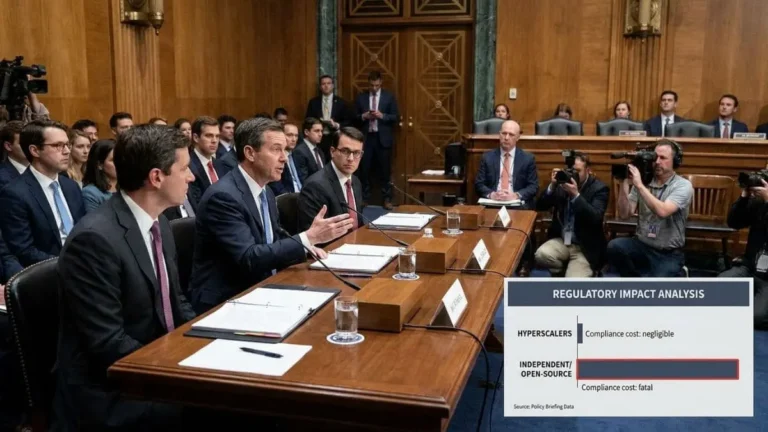
However, the threefold price difference between e-methanol and conventional, fossil-derived methanol is said to be the major challenge, preventing shipping lines from switching voluntarily without regulatory compulsion or subsidized arrangements.
The Science and the Shell Game
The critics point to what appears to be a logical contradiction in the fuel’s environmental claims: “If the CO₂ is captured to make the fuel, and then you burn the fuel to release that CO₂ back into the atmosphere, what exactly have you achieved? This is an extraordinarily expensive way to do nothing.”
The answer depends critically on where the CO₂ comes from in the first place, and where the energy used to produce the hydrogen originates. If the hydrogen is produced using fossil fuel electricity and the CO₂ is captured from a coal plant, then e-methanol is indeed little more than what critics describe as an expensive, carbon-intensive, and counterproductive laundering operation.
The EU’s regulatory framework addresses this by promulgating rules under its Renewable Energy Directive (RED), which define green hydrogen and sustainable carbon. The RED allows e-fuel producers to use carbon captured from industrial sources of fossil fuels until the 2041 deadline. Afterward, all CO₂ used in certified green e-fuels must come either from the ambient atmosphere via direct air capture or from biogenic sources such as agricultural waste and biomass fermentation.
When that infrastructure runs as designed, powered by genuine renewable energy and fed by atmospheric or biogenic carbon, the numbers become compelling. The IFP Energies Nouvelles estimates that e-methanol produced from certified renewable electricity and green hydrogen has lifecycle greenhouse gas emissions approximately 65 to 80 percent lower than those of conventional marine fuel on a well-to-wake basis.
The Carbon Vacuum Cleaners
The idea behind direct air capture (DAC) is straightforward. Giant fans push ambient air through chemical filters, typically liquid solvents or solid sorbents that bind to CO₂ molecules. The global DAC market was valued at approximately $1.19 billion in 2025 and is expanding rapidly, but the retail spot price for DAC-captured CO₂ remains high and needs to fall below $100 per ton by 2040 for e-fuels to become economically viable without sustained government subsidies.
Interestingly, none of the world’s most advanced DAC infrastructure is being built in Europe, but in the United States, despite Europe’s leading regulatory push for green fuels. The US Inflation Reduction Act offers a direct cash payment of up to $180 for every ton of CO₂ captured and permanently stored, while Europe’s Emissions Trading System punishes emitters but offers no comparable direct reward.
The Political Economy of Pain: The Rising Green Methanol Price
The mechanism by which e-fuels will achieve price parity with conventional fuels by the late 2030s is not that green methanol price will become dramatically cheaper, but fossil fuels will be made dramatically more expensive through escalating carbon taxation.
The EU’s FuelEU Maritime regulation and the expanded Emissions Trading System are specifically designed to impose rising carbon levies on every ton of conventional marine fuel and jet fuel, pushing their market price above the cost of synthetic alternatives.
From a climate perspective, this is a coherent policy. From a political economy perspective, it is a live grenade. Whenever regulation creates a large and sustained price differential between two interchangeable commodities, the illicit trade always fills the gap. The global illicit oil trade is already a multi-billion-dollar ecosystem.
As green fuel mandates push the legal price of marine bunker fuel to two or three times the cost of unregulated crude, the financial incentive for sophisticated smuggling syndicates will be staggering.
The Roads Not Taken
Against these obstacles, energy economists and policymakers have proposed two strategies that aim to achieve mass adoption without triggering either public revolt or criminal arbitrage.
The first, and most politically viable, is phased blending. Rather than mandating an immediate switch to 100 percent e-methanol, the proposal requires shipping companies to incorporate a small but rising proportion into conventional bunker supplies. The second strategy is scope limitation: explicitly exempting passenger cars from e-fuel mandates because battery electric vehicles already address that sector’s emissions trajectory.
A Crisis That Changes the Calculus
The Strait of Hormuz has been a theoretical vulnerability in the global energy system for decades. The severe Strait of Hormuz closure impact on February 28, 2026, turned that theoretical vulnerability into a stark reality, underscoring the urgent need for alternative supply chains and UAE Hormuz bypass strategies to protect regional trade.
The case for e-fuel investment, previously driven by climate change targets, now extends to energy security, supply chain resilience, and price stability.
The e-fuel transition will happen. The Hormuz closure has made that outcome nearly inevitable, not because governments have suddenly discovered climate virtue, but because energy security has become indistinguishable from industrial survival, a classic dynamic that defines the modern great power economy. The Strait of Hormuz did not create this reckoning. It simply moved up the date.
Read more analysis in our Great Power Economics section.