The Chokepoint Strategy: Trump and Iran in the Oil & Gas Supply Chain War

With Brent crude spiking near $100 a barrel, operators in the global oil and gas supply chain are demanding an alternative to the Strait of Hormuz.
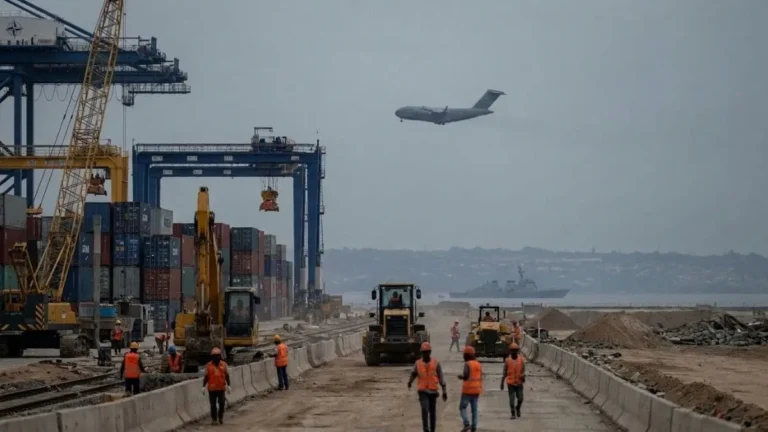
The recent escalation between the United States, Israel, and Iran has brought the strait to an effective standstill, creating an economic crisis that has forced the White House to shift from military reactivity to proactive, capital-intensive infrastructure finance.
The UAE’s parallel infrastructure response, accelerating its west-east pipeline to bypass Hormuz entirely, also represents the same redundancy logic.
The Partnership for Allied Construction & Trust (Pact) is a long-term insurance policy designed to prevent a single maritime chokepoint from ever halting regional energy flows again.
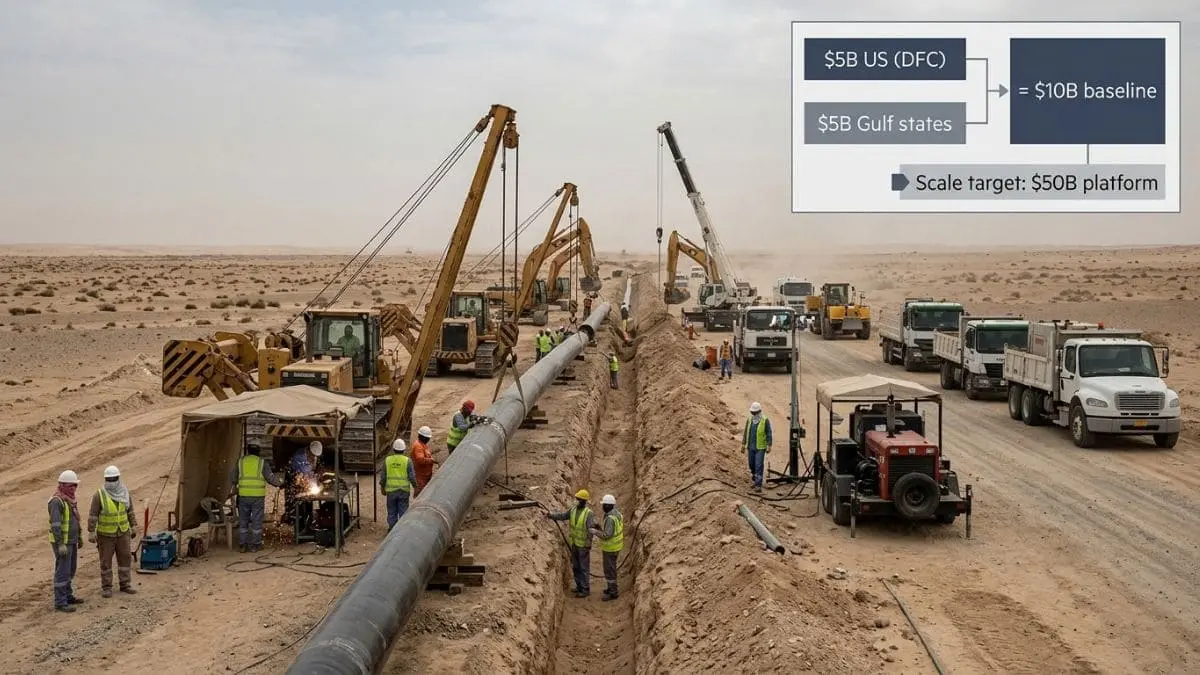
Washington is committing $5 billion through the US International Development Finance Corporation (DFC) and asking eight Middle Eastern nations to match it, creating a baseline $10 billion fund.
How does the Pact fund affect the Middle East oil & gas supply chain?
The Pact is a proposed $10 billion joint investment fund between the US and Arab states to secure the global oil & gas supply chain, rebuild infrastructure, and finance alternative routes to bypass the Strait of Hormuz.
The Financial Architecture of Redundancy
The Pact’s core objective is to rebuild Middle East energy infrastructure heavily damaged during the war with Iran, and to build alternative export routes that reduce the region’s structural reliance on the Strait of Hormuz.
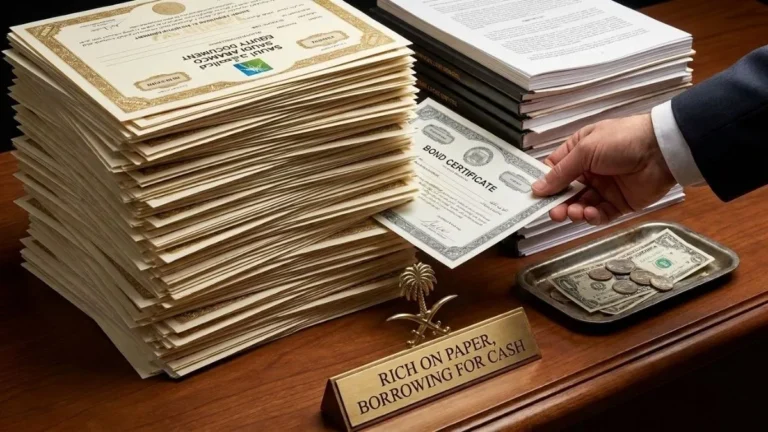
According to the reports, the US will pour $5 billion, while regional states, including Saudi Arabia, the UAE, Qatar, Bahrain, Kuwait, Oman, Iraq, and Jordan, are asked to fund a matching amount. The US government intends to manage the fund through the DFC. If it happens, then a US development agency would lead a fund that includes some of the world’s richest sovereign wealth funds.
This proposed $10 billion baseline fund would serve as loss-absorbing equity to attract private capital from financial giants, helping scale it into an investment platform of more than $50 billion, and would isolate Iran from the regional energy grid. By fortifying its allied bloc, the US is trying to shift the balance of power to get leverage in future diplomatic negotiations with regional powers.
Will Iran’s leverage be completely bypassed?
It is premature to claim that overland pipelines render Iran’s leverage obsolete. Roughly a fifth of global seaborne oil trade passed through the Strait of Hormuz before this war, making it impossible to replace that volume immediately.
Furthermore, alternative land routes exchange maritime vulnerability for terrestrial exposure. This physical vulnerability was exposed when Saudi Arabia was forced to shut down its vital East-West pipeline following a drone strike on three pumping stations.
Oil and Gas Supply Chain Winners and Losers
| Supply Chain Vector | Strategic Role & Vulnerability | Commercial Winners & Losers |
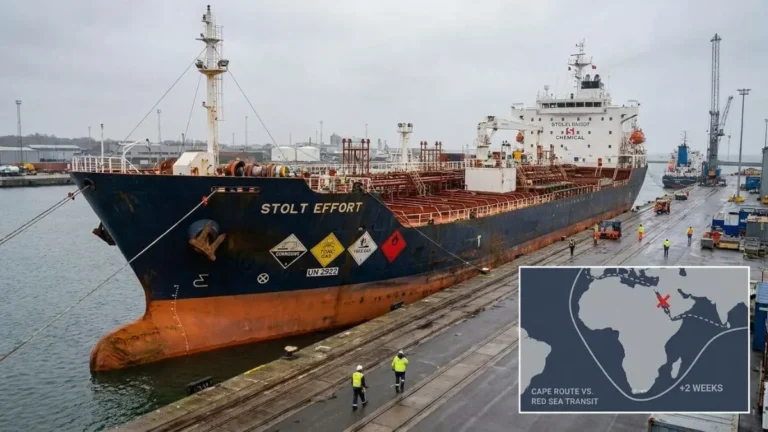
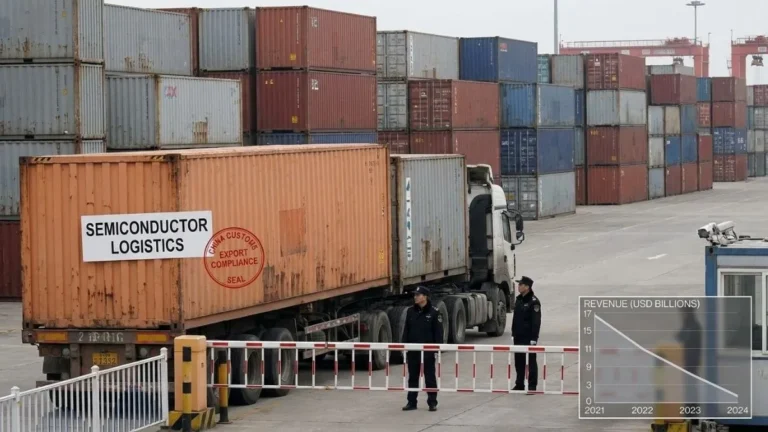
| Maritime Shipping (The Trump Hormuz Route) | Critically vulnerable to naval blockades and Iran’s punitive $2 million per-vessel transit tolls. | VLCC tanker operators face collapsing charter margins. Shipping groups fear contagion, warning this toll model could spread to other global chokepoints like the Strait of Malacca. |
| Overland Pipeline Redundancy | Dilutes chokepoint leverage but remains highly susceptible to regional drone strikes (e.g., East-West pipeline). | Oilfield services giants (SLB, Baker Hughes, NOV) secure massive contracts for pipeline construction, drilling, and refinery repairs. |
| Catalytic Private Equity | The $10B government fund absorbs initial losses, de-risking high-yield infrastructure. | Institutional investors gain subsidized entry into the $50B+ Middle East energy market. |
Washington, through the Pact, is trying to dilute the most critical geopolitical weapon that Iran has used to choke the world’s energy supply.
Despite the constant threat of drone strikes, Washington’s bet on this infrastructure pivot serves as the ultimate economic deterrent in a new era where energy corridors and financial architecture are being weaponized simultaneously.
Read more analysis in our Great Power Economics section.