What Is Hydrogen Bromide Gas Used For? The Geopolitical Semiconductor Chokepoint

⏱️ 4 Mins Read
The global semiconductor gases market is driven largely by demand for advanced chip manufacturing. Energy analysts often focus on natural gas disruptions affecting helium, which can decrease fab inventories and extend delivery dates. However, the electronics supply chain faces more volatile geopolitical chokepoints in gas-phase refinement.
Although hydrogen bromide gas is an irreplaceable etching agent for advanced sub-5nm logic and 3D NAND flash memory, the supply chain for this critical gas has a massive geographic vulnerability, as only a few companies control electronic-grade purification globally and the raw elemental feedstock is tethered to the Dead Sea amid an unabated regional war.
What is hydrogen bromide used for in the semiconductor industry?
Hydrogen bromide gas (HBr) is an electronic-grade dry etching agent used in semiconductor wafer manufacturing. During plasma etching, it reacts with silicon to form volatile silicon bromides, allowing microscopic, vertical trenches to be carved into polysilicon gates and 3D NAND structures without eroding the protective silicon dioxide mask.
Supply chain disruptions in electronic gases can cause quick operational halts, but they often create invisible friction.
As the helium supply chain is disrupted, limited substitutes and worsening extractor economics mean an HBr shortage manifests as longer lead times for specialized microbulk tanks. The shift to leading-edge nodes has amplified demand for specialty gases that deliver precise etching results, leaving chip fabricators highly sensitive to disruptions anywhere in the supply chain.
Extraction vs. Electronic-Grade Purification
Difference between hydrogen bromide gas and hydrobromic acid?
Hydrogen bromide (HBr) is an anhydrous gas at room temperature, primarily used as a dry etching agent in chip cleanrooms. Hydrobromic acid (also known as HBr acid or hydrogen bromide acid) is formed when hydrogen bromide gas dissolves in water, creating a strong mineral acid widely used in industrial chemical synthesis and pharmaceuticals.
The hydrogen bromide supply chain’s vulnerability is geographically divided. The raw material (bromine) is extracted in a few specific locations globally, primarily Israel, Jordan, and the US. However, the highly advanced purification and packaging infrastructure and the semiconductor manufacturing fabs are in East Asia (Japan, South Korea, Taiwan) and Europe.
This geographical split creates a long, highly vulnerable logistics tail for a critical semiconductor etching gas, as the advanced chemical suppliers in Japan and South Korea import raw liquid bromine and handle the complex, dangerous chemical synthesis required to purify it into ultra-high-purity HBr gas.
Then, the advanced semiconductor manufacturing fabs that rely on HBr as an irreplaceable plasma etching gas for memory and logic chips are mostly located in Taiwan, South Korea, Japan, and Europe.
| Feature | Hydrogen Bromide (HBr) Gas | Hydrobromic Acid |
| Physical State | Anhydrous (dry) gas at room temperature | Liquid (HBr gas dissolved in water) |
| Material Classification | Ultra-high-purity specialty gas | Strong mineral acid |
| Primary Industry | Semiconductor manufacturing | Pharmaceuticals and chemical manufacturing |
| Core Application | Irreplaceable dry plasma etching agent for logic and memory chips | Broad industrial chemical synthesis |
The Middle East Conflict and the Feedstock Chokepoint
Israel’s Dead Sea is the world’s richest source of bromine, and European and Asian specialty gas companies rely entirely on raw bromine feedstock.
Since early 2026, the regional war in the Middle East has severely strained local logistics, maritime shipping lanes, and export stability, placing these gas companies in a geopolitical trap.
Although major specialty gas companies refining HBr in Europe and Asia are not directly involved in the crisis, they are profoundly affected. The concentration is more severe than the geographic map suggests.
South Korea sources 97.5% of its bromine imports from Israel. Japan, which supplies South Korea with the largest volume of finished HBr gas, imports more than 70% of its own liquid bromine feedstock from Israeli sources.
Samsung and SK Hynix, which together produce roughly 64% of global DRAM and NAND flash, are therefore multiple steps downstream from a single conflict zone, separated by thousands of kilometers of ocean and two additional processing stages, yet ultimately dependent on Dead Sea extraction for their most critical etching chemistry.
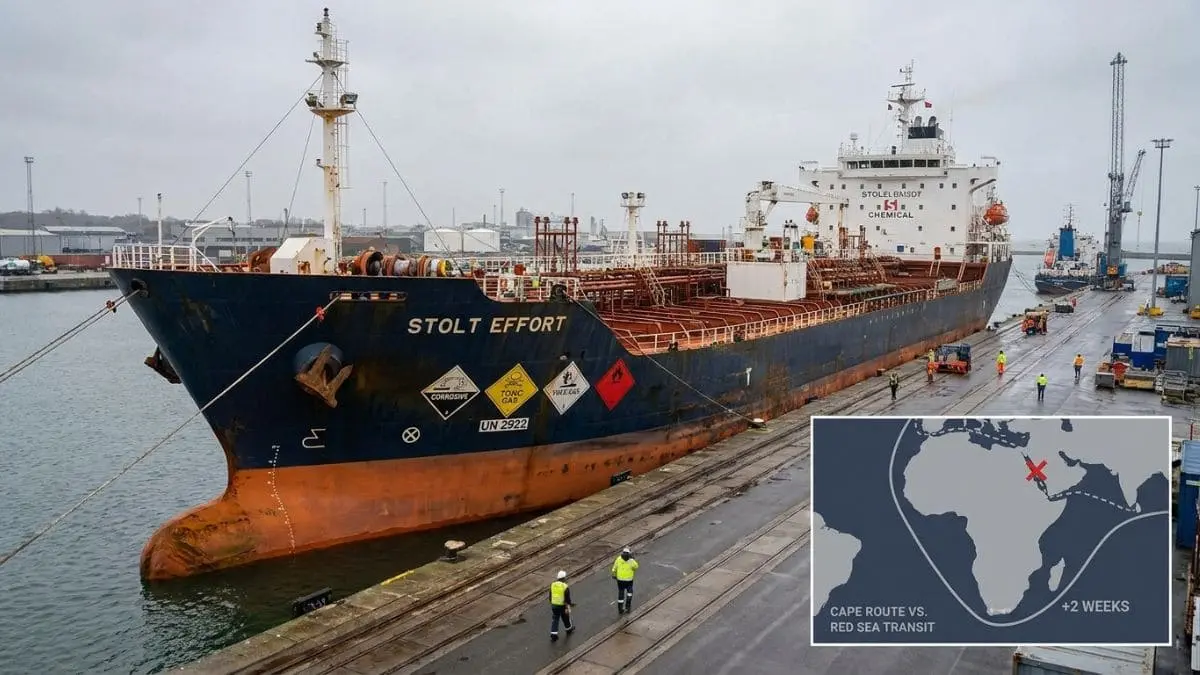
Raw bromine and liquefied HBr are classified as highly corrosive hazardous materials.
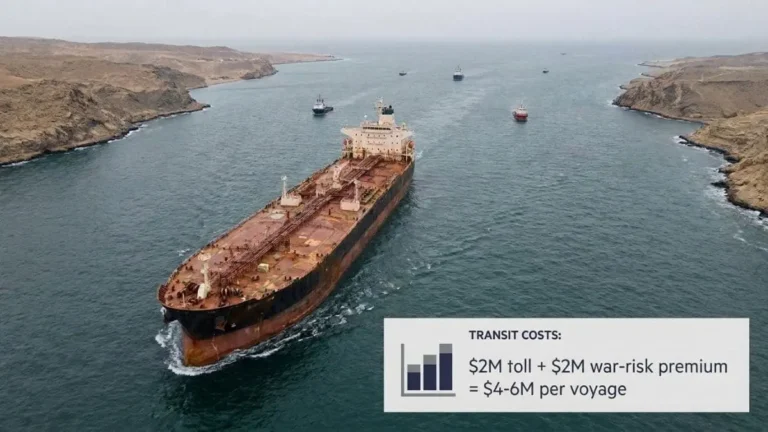
With the Red Sea effectively compromised by ongoing regional conflict, hazardous chemical shipments face two costly realities:
- The Cape of Good Hope Reroute: Diverting hazardous cargo ships around Africa adds up to two weeks of transit time, instantly breaking the just-in-time inventory models of Asian refinement plants.
- War Risk Premiums: Insurance premiums for specialized vessels carrying such chemical shipments that attempt to access Israeli ports or transit the Gulf of Aqaba have surged because these chemical tankers cannot be easily substituted, compressing margins for European and Asian gas suppliers.
| Supply Chain Phase | Geographic Location & Geopolitical Impact |
| Raw Extraction (Bromine) | Highly Concentrated: Extracted primarily from Israel’s Dead Sea (the world’s richest source), with secondary sources in Jordan and the US. |
| Chemical Refinement | Disconnected from Source: Complex, hazardous purification into ultra-high-purity HBr happens in East Asia (Japan, South Korea) and Europe. |
| End-Use Fabs | Dependent on Imports: Semiconductor manufacturing facilities relying on HBr are clustered in Taiwan, South Korea, Japan, and Europe. |
| Maritime Logistics | Route Disruption: The 2026 Middle East conflict has compromised Red Sea routes. Hazardous shipments are diverted around the Cape of Good Hope, adding two weeks of transit and breaking Asian “just-in-time” inventory models. |
| Transport Economics | Surging Costs: Raw bromine and liquid HBr are highly corrosive and require irreplaceable specialty tankers. War risk premiums for accessing Israeli ports or the Gulf of Aqaba have surged, severely compressing supplier margins. |
The Diverging Silicon Supply Chains
This logistical bottleneck highlights a diverging global architecture for semiconductor inputs. Tech giants and hardware manufacturers may monitor shipping-lane efficiencies for standard materials, but their most critical operational dependency remains tethered to a highly consolidated refinement network in Asia and Europe, which is entirely at the mercy of raw bromine extraction in the Middle East. As a result, the memory supply squeeze has become so severe that component costs now make up to 64% of the price of budgeted smartphones.
The most advanced fabrication plants depend on the geopolitical stability of the Dead Sea and uninterrupted transit of hazardous chemical inputs.
Read more analysis in our Great Power Economics section.