If Trump Lands in Islamabad: The Economic Invoice Pakistan Must Present

If Trump Lands in Islamabad: The Economic Invoice Pakistan Must Present

⏱️ 4 Mins Read

📌 Executive Brief

  • A potential visit by US President Donald Trump to Islamabad for the US-Iran peace agreement represents a once-in-a-generation opportunity for Pakistan to reset its global trade relations.
  • This unprecedented geopolitical leverage could unlock massive economic concessions, including slashing US textile tariffs to 10% and securing Western waivers to finally operationalize the stalled Iran-Pakistan gas pipeline.
  • However, a high-stakes “catch” threatens these potential benefits, as Islamabad must carefully navigate local industry vulnerabilities while executing a delicate balancing act with Beijing’s massive investments.
  • Find out how the government can strategically convert this highly perishable diplomatic spotlight into durable economic structures before the international window of opportunity abruptly closes.

If Trump lands in Islamabad to prop up a peace deal with Iran, it would be a once-in-a-generation opportunity for Pakistan to reset its trade relationship not only with Washington but globally. The question is whether Islamabad has learned from the past and knows exactly how to capitalize on this moment to maximize economic benefits.

When US President Donald Trump told reporters last Thursday that he might fly to Islamabad to witness the signing of a US-Iran peace agreement, praising Prime Minister Shehbaz Sharif and Army Chief Gen. Asim Munir as great mediators, he provided Pakistan with an opportunity far more durable than a mere ceasefire scenario.

It seems evident that a deal between the US and Iran is imminent. President Trump has already announced on social media that US negotiators led by Vice President JD Vance, Special Envoy to the Middle East Steve Witkoff, and Presidential Advisor Jared Kushner are expected to land in Islamabad on April 20, 2026, for a possible second round of peace talks.

This is a truly unprecedented event for a country that has long struggled to translate its strategic geography into economic reward. If Trump arrives in Islamabad, it will be a powerful signal to the world that Washington is seriously paying attention to Pakistan.

The Trade Equation

Pakistan’s economic stakes for this peace deal are enormous but measurable, as the United States is already Pakistan’s single largest export destination. The bilateral trade volume between these two countries reached $10.1 billion in 2024 and $8.7 billion in 2025.

exports to US
Source

But Trump’s trade policy has been a sword hanging over that relationship.
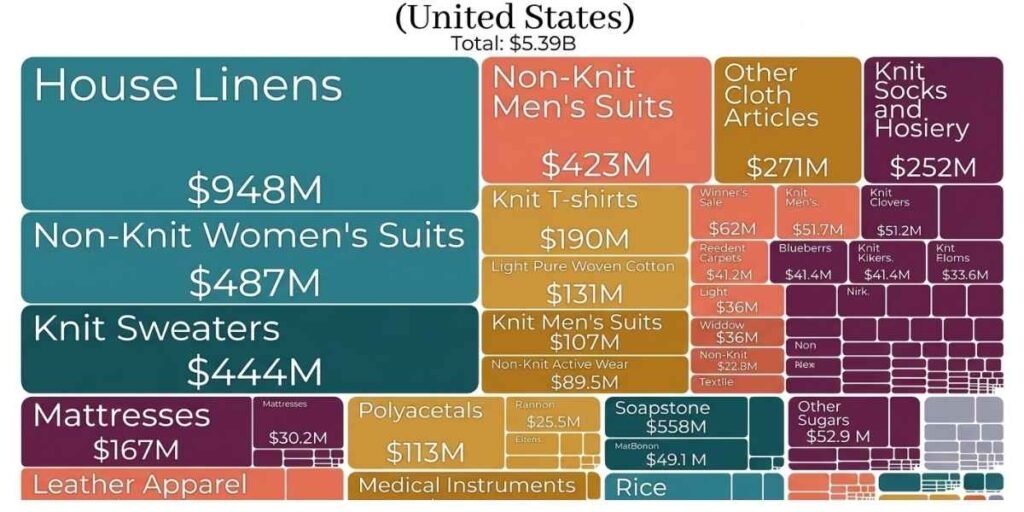
US reciprocal tariff

The Diplomatic Dividend

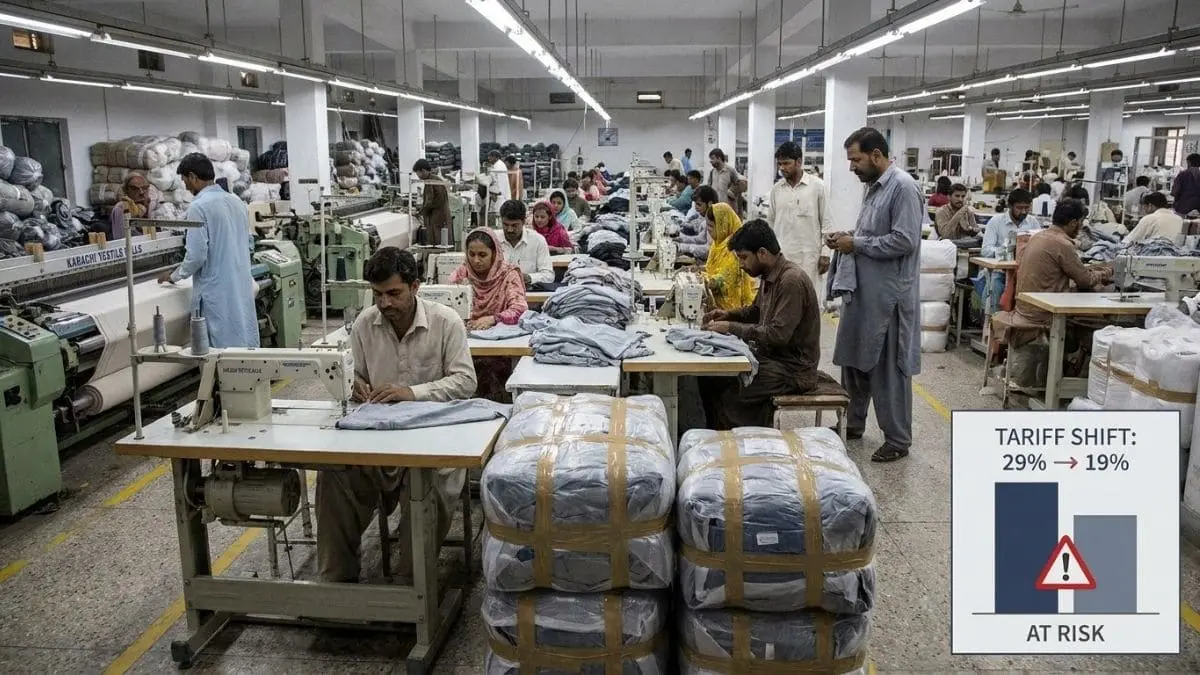
Pakistan’s current geopolitical relevance is not just emblematic; it has already begun to yield concrete economic concessions. A recent bilateral US-Pakistan trade deal formalized in July 2025 has slashed the punishing 29% tariff, calculated based on the $3 billion trade surplus, to 19%. This meaningful reduction could not have been secured through routine diplomacy alone.

In exchange for the tariff cut, Pakistan reportedly offered to purchase U.S. crude oil, while the U.S. agreed to explore and develop Pakistan’s underexplored oil reserves, particularly in offshore Balochistan and onshore regions. In addition, the US also agreed on cooperation in sectors like mining, IT, cryptocurrency, and digital infrastructure.

If Trump actually lands in Islamabad, Pakistan would hold rare negotiating leverage, not just for tariff relief, but for investment, security cooperation waivers, and a fundamental repositioning in Washington’s strategic calculus.

Trade Analyst Perspective

The possible visit of the US president would be different from the July 2025 deal because it would be the most powerful public endorsement for Pakistan as a stable, reliable strategic partner, and this unexpected perception change would drive capital flows from international businesses.

What Pakistan stands to gain regardless of the US-Iran deal outcome

Accelerated tariff negotiation leverage

With Trump publicly praising Pakistan’s leadership and showing his intention to visit Islamabad, Pakistan’s finance ministry gains a once-rare seat at Washington’s trade table. The 19% tariff secured in 2025 could be further renegotiated toward 10–12%, potentially recovering $500m–$700m in annual export value for Pakistan’s textile sector.

FDI confidence surge, especially from the US and the Gulf

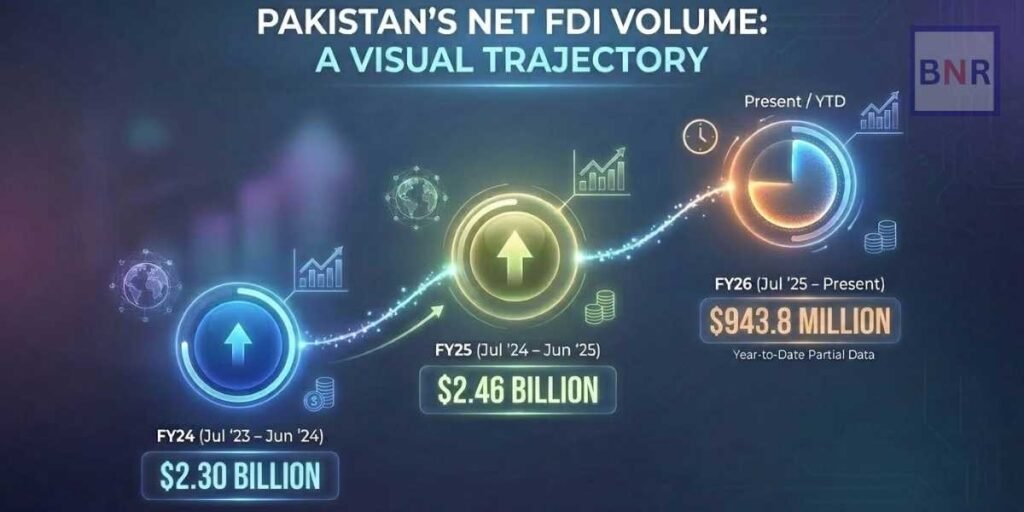
Pakistan’s FDI historically hovered between $2.3 billion and $2.4 billion during the last couple of fiscal years and currently stands at just $943.8 million during the July-March period, which is far below that of regional peers like Vietnam’s FDI – $38.4 billion or Malaysia’s FDI – $107.9 billion.

Pakistan FDI chart
Source

A Trump visit could serve as an international risk-rating event, potentially accelerating American private equity, energy, and tech sector interest in Pakistan’s Special Economic Zones.

GSP-Plus equivalent or preferential market access

Pakistan’s textile exporters currently pay up to 10% base tariffs on goods to the US, with no duty-free access equivalent to GSP-Plus. Diplomatic goodwill of this magnitude could unlock a preferential trade framework, a genuine first in the two countries’ trade history.

IMF program insulation and credit rating improvement

Pakistan is currently under a $7 billion Extended Fund Facility (EFF). A visible US endorsement, including a possible presidential visit, could substantially reduce the country risk premium attached to Pakistani sovereign debt and could help stabilize the rupee, lower borrowing costs, and unlock bilateral financial support from Washington-aligned institutions like the World Bank and ADB.

IT and services export breakthrough

Pakistan’s IT exports have grown to over $3 billion during the first nine months of the current fiscal year. A US-Pakistan relationship elevated by a historic presidential visit could open American federal procurement channels to Pakistani IT firms and reduce friction around US work visas for Pakistani tech professionals amid the crackdown against Indian IT experts.

Diplomatic Leverage on the Iran-Pakistan Gas Pipeline

The Iran-Pakistan gas pipeline was formally signed in 2009, and Iran has completed its construction work, while progress on Pakistan’s section has remained stalled due to the threat of US financial penalties. Now, Islamabad could secure Western waivers to finally operationalize the project.

Could Be a Big Dividend For Pakistan

The Catch

None of this is guaranteed, but possibilities cannot be ruled out.

Pakistan’s business environment carries real structural risks – policy inconsistency, energy costs, and legal uncertainty for foreign investors that cannot be overlooked. Additionally, Pakistan’s trade surplus with the US is also an indigestible statistic for Trump’s trade team.

“Now, Pakistan has to play smart, especially after having a current peace mediator status to minimize the pressure of increasing American imports alongside any tariff relief conversations because neither government nor local industry is currently able to absorb the unwarranted burden of US imports to make a bilateral deal politically viable in Washington,” former VP FPCCI Arshad Jamal said.

Furthermore, any deepening of the US-Pakistan relationship that results from Iran’s mediation will be watched closely in Beijing, where China’s FDI in Pakistan surged 90% in FY2025 to $1.22 billion. Islamabad will need to manage a delicate balancing act between its oldest strategic partner and its newest economic anchor.

The Bottom Line

Whether or not Trump’s visit to Islamabad materializes, Pakistan has already proven something international investors have long doubted: it can be a credible, effective player on the global diplomatic stage.

The global recognition as a peace mediator for a nation that was seen primarily through the lens of security risk may be worth more than any deal.

With Trump’s public praise, a concluded trade deal, a Saudi deposit support, and a potential US presidential visit, Pakistan has rarely held this much geopolitical leverage simultaneously. Now, the Pakistani government and its business chambers should treat it as a perishable asset, converting it into durable economic structures soon before the diplomatic leverage passes.

image
BNR Logo

Stay Ahead of the Markets with BNR

Start your day with our top story plus "The Editor is Watching", an exclusive daily analysis on markets, commodities, and currencies.

We don’t spam! Read our privacy policy for more info.

What You Missed