India Economy: Why Rupee and Oil Trump Developing India Growth

⏱️ 2 Mins Read
External shocks expose structural weaknesses in India economy. The rapid rise of developing India hides its fragile foundation. Private investment stalls while energy costs surge, revealing a vulnerability in its growth model.
📌 Executive Brief
- India’s nominal GDP slips to sixth place globally, confirming a loss of momentum in the India economy.
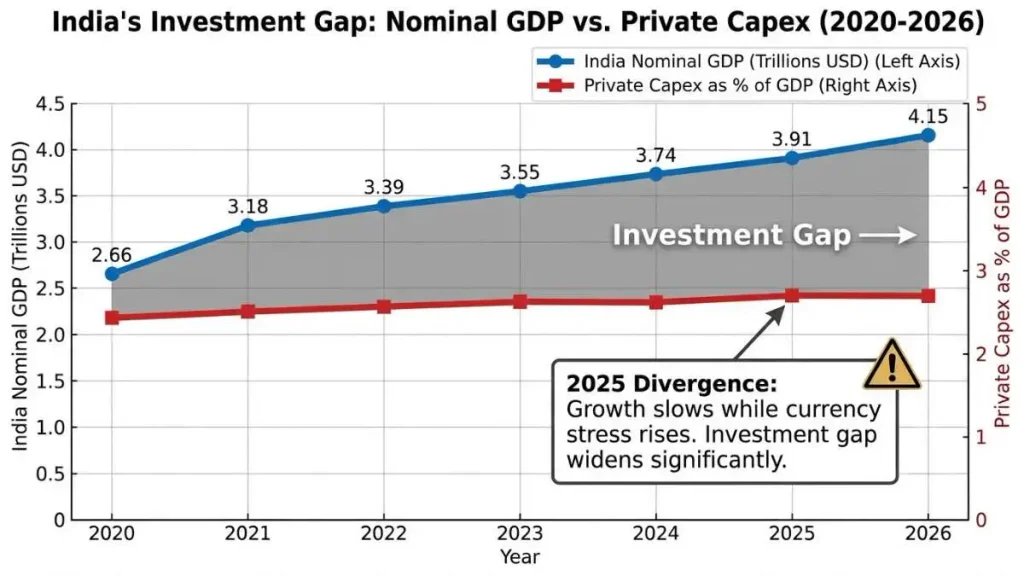
- Private corporate capex stagnates below 12% of GDP, creating an investment stalemate.
- The rupee hits over 90 against the dollar, signaling widening capital outflows and external stress.
The Strategic Reality Of Developing India
India slipped to sixth from fifth in the global GDP ranking, driven by rupee depreciation and external shocks, while the $3.92 trillion valuation depends heavily on public infrastructure spending, leaving the Indian economy vulnerable as state-led growth cannot sustain momentum without corporate follow-through. The loss of momentum is evident in India’s slip in the dollar league table despite strong growth. Economists link the downgrade to rupee depreciation, not a growth slowdown, and the IMF projects 7% real growth for 2026, the highest among major economies.
This paradox captures the current landscape, where high corporate cash reserves coexist with stalled private investment, and companies hoard liquidity and avoid deploying it into capex, preventing public spending from translating into broad-based growth. With private capex stagnating, the structural engine idles. The India economy lacks the buffer to absorb sustained external pressure.
| Global Standing | Nominal GDP Rank | 6th Largest Economy |
| Investment Health | Private Corporate Capex | <12% of GDP |
| Currency Stability | INR/USD Exchange Rate | Over 90 |
| Energy Dependency | Oil Import Cost Impact | Rising Import Bill to $89.35 billion in October 2026 |
| Growth Momentum | GDP Growth Decline | 7.8% to 7% |
| Capital Flows | Net Capital Outflow | Widening Deficit |
Indian Corporates Hold Record Cash Reserves
Indian corporates hold record cash reserves while private capital expenditure stalls, breaking the transmission mechanism between public spending and broad-based growth. The private sector refuses to deploy capital despite healthy balance sheets.
This structural disconnect shows private corporations, with capex stagnating below 12% of GDP, holding liquidity instead of expanding capacity, resulting in a fragmented economy where state-led projects lack private follow-through, signaling deep confidence erosion.
Consequently, companies prioritize debt repayment over expansion. The $3.92 trillion economy depends heavily on government infrastructure, and without private participation, growth remains narrow and fragile.
India’s Energy Dependency Exposed
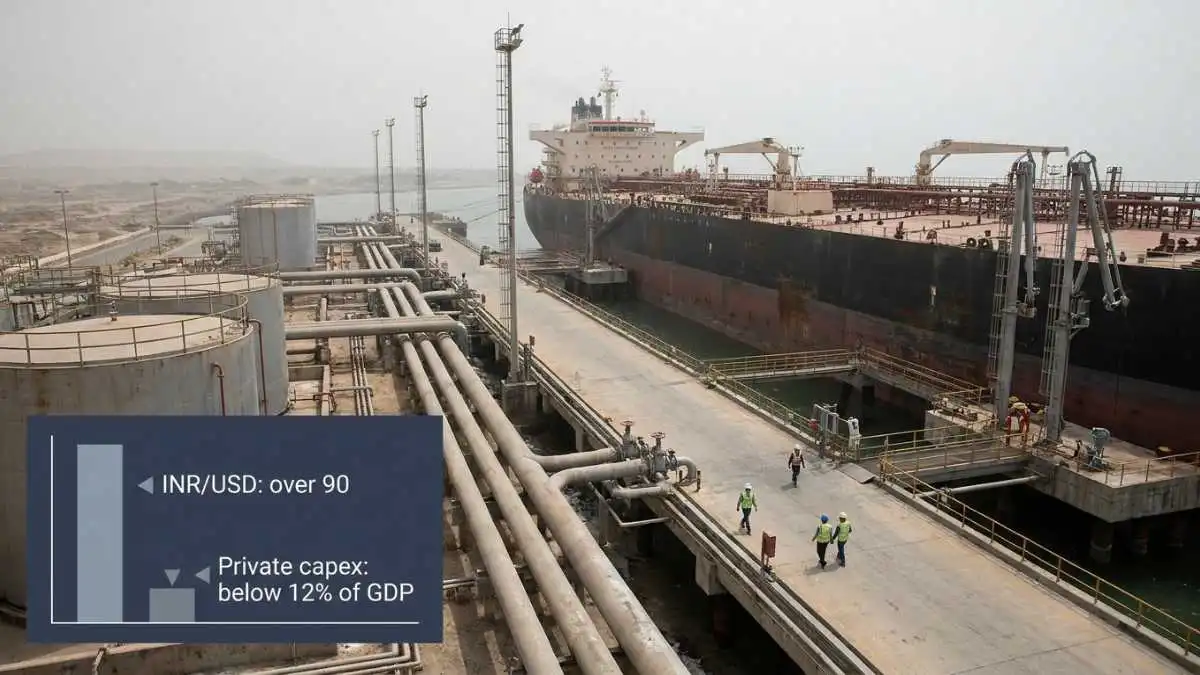
Oil price volatility has badly exposed India’s energy dependency. The rupee has crossed 90 against the dollar, widening the current account deficit and lifting import costs. The shock traces back to the Strait of Hormuz, which rewired Asia’s shipping costs.
With around 90% of its crude oil imports, India drains heavy foreign exchange reserves after each spike in global prices. The external sector absorbs the shock directly. Capital outflows accelerate as investors seek safety, defining a new economic reality in which external stability no longer buffers domestic growth.
Public Spending Limits of India Economy
Government infrastructure spending drives current growth. Yet this model faces fiscal constraints. Public works alone cannot sustain long-term expansion. The burden of the fiscal deficit grows heavier. World Bank and IMF metrics confirm India slips to the sixth-largest economy by nominal GDP.
Public spending masks underlying private weakness. The gap between state investment and private action widens. Sustainability requires private sector re-engagement. Without it, growth remains state-dependent. The structural fragility persists. India must resolve the investment gridlock to secure its global economic position.
2026–2027 Strategic Takeaways
Policymakers must prioritize private sector re-engagement to sustain growth. Public infrastructure spending alone cannot drive long-term expansion. Boards need to assess capital deployment strategies against rising external risks. Markets will reward firms that stabilize supply chains and reduce import dependency. The ranking slip lands as New Delhi also faces a tightening regional security picture.
The structural fragility of the India economy demands immediate attention. Investors should closely monitor corporate cash reserves and capex ratios. A shift toward productive investment will determine future resilience. The next two years will define whether India consolidates its global position or faces a prolonged adjustment period.
Read more analysis in our Global Business section.