Weekly Market Review May 16, 2026 – Global Stocks, Geopolitics, and Technical Signals

⏱️ 2.5 Mins Read
Weekly Market Review May 16, 2026: Global markets painted a deceptively optimistic picture last week as US tech giants posted eye-catching gains, the Nikkei surged to near-term highs, and the S&P 500 recovered meaningfully from its February-to-April lows. But beneath the surface, indicators suggest remaining cautious, as not a single instrument generated a confirmed directional signal, indicating markets are running sideways with no clear destination.
The Trump-Xi Beijing summit closed with limited concrete outcomes and a pointed warning from Xi on Taiwan. The US-Iran ceasefire remained, in Trump’s own words, ‘on life support’.
Israeli strikes continued in Lebanon. Oil markets watched the Strait of Hormuz nervously. Against that backdrop, the fact that equities held up at all is notable, but the absence of confirmed signals suggests the market is not fully pricing the risks either.
Weekly Market Review May 16, 2026:
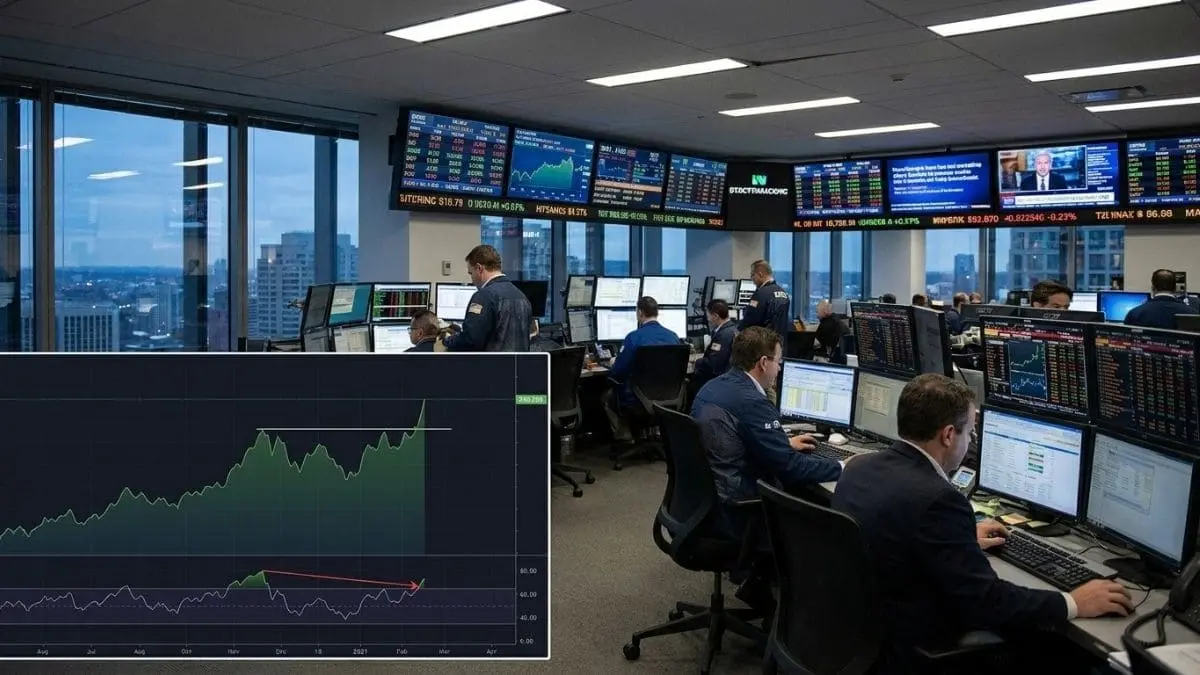
The S&P 500 gained 1.2% during the past week and looks technically constructive. The index has confirmed a Change of Character and Break of Structure to the upside, with support from the EMA 200 and MACD. Yet RSI is flagging divergence, and volume is not keeping pace.
The index is pressing into resistance territory where supply tends to re-emerge. The rally is real, but it is getting thinner. One catalyst, a Hormuz disruption, a CPI surprise, or a Taiwan headline, could unwind it quickly.
US Equities: Divergence Between Names
NVIDIA was the week’s biggest gainer, up 6.16%, driven by AI momentum. The AI chip titan is projected to earn a record $190 billion in 2026. The chart shows a massive Break of Structure to the upside, with MACD and volume confirmed. It is technically the most constructively positioned name in the group. But it is deeply extended, running without RSI confirmation, entirely on momentum. That is a position that rewards patience, not chasing.
Apple showed the cleanest structural recovery. The risk for Apple is specific and geopolitical: the Trump-Xi summit resolved nothing on trade or technology. Apple’s manufacturing base remains overwhelmingly in China, and any renewed tariff pressure or export restriction would hit faster than any other in the group.
Tesla was the clear laggard, sitting between major resistance and support levels. Political associations, demand concerns, and competitive pressure from Chinese EV makers all weigh, and the charts agree.
Meta was the week’s worst performer among US stocks, still sitting in the Discount zone. MACD and EMA 200 are leaning bearish. Volume at 13.27 million was notably light, suggesting no institutional conviction in either direction. Meta’s revenue model is highly sensitive to the kind of macro uncertainty that dominated headlines this week: when geopolitical risk rises, ad budgets contract.
Europe: Fading from Highs
European indices were broadly weaker, caught between two headwinds: the implications of a US-China summit for global trade, and the energy price risk embedded in the Strait of Hormuz situation. European industry is more directly exposed to oil price shocks than the US, and that vulnerability showed up in the charts.
Asia: Japan Surges, Hong Kong Waits
The Nikkei 225 was the strongest-performing index this week. The chart shows a textbook Break of Structure with MACD confirming and price rallying into the resistance level. Japan’s equity market has been a structural beneficiary of yen weakness and strong global export demand, and this week’s price action reflects that.
The risk for Japan is entirely geopolitical. The Trump-Xi summit and Xi’s direct warning on Taiwan put Japan in an uncomfortable position. Japan is the closest major US ally in the region, hosts a significant US military presence, and would be directly affected by any escalation in the Taiwan Strait.
The gap between the Nikkei’s strong technical picture and its geopolitical vulnerability is one of the sharpest disconnects in this week’s analysis.
The Hang Seng held up better than the macro headlines might have suggested. The price is consolidating below its Break of Structure level, well short of the resistance level, reflecting the caution that is entirely appropriate given that Xi’s Taiwan warning came directly out of this week’s summit. Hong Kong sits at the intersection of US-China tension in a way that no other market in this group does. The tail risk here is meaningful.
The Week’s Key Themes and What to Watch Next
Three macro stories will drive market direction in the week ahead, and none of them will be resolved this week.
The fragility of the Iran ceasefire is the most immediately market-relevant. A collapse of the ceasefire or any physical disruption to Strait of Hormuz shipping would spike oil prices, re-accelerate inflation expectations, and force central banks into a more hawkish posture at exactly the wrong moment for equity valuations. European and Asian markets would feel this first and most severely.
The US-China relationship remains structurally unresolved. The Trump-Xi summit achieved atmosphere but not substance. For Apple, for the semiconductor supply chain, and for Hong Kong equities, the absence of concrete progress is a soft negative. Markets had priced in some hope for de-escalation; that hope was not rewarded.
The technical recovery from the February-to-April lows is real and should not be dismissed. But confirmed signals remain selective, present in a handful of names, absent across the broader market, and do not yet justify aggressive positioning.
The market is telling participants to be selective, to manage risk carefully, and above all, to wait for clarity that the macro environment has not yet provided.