Why APEC 2026 Matters More Than The Last Trump Xi Meeting

⏱️ 3 Mins Read
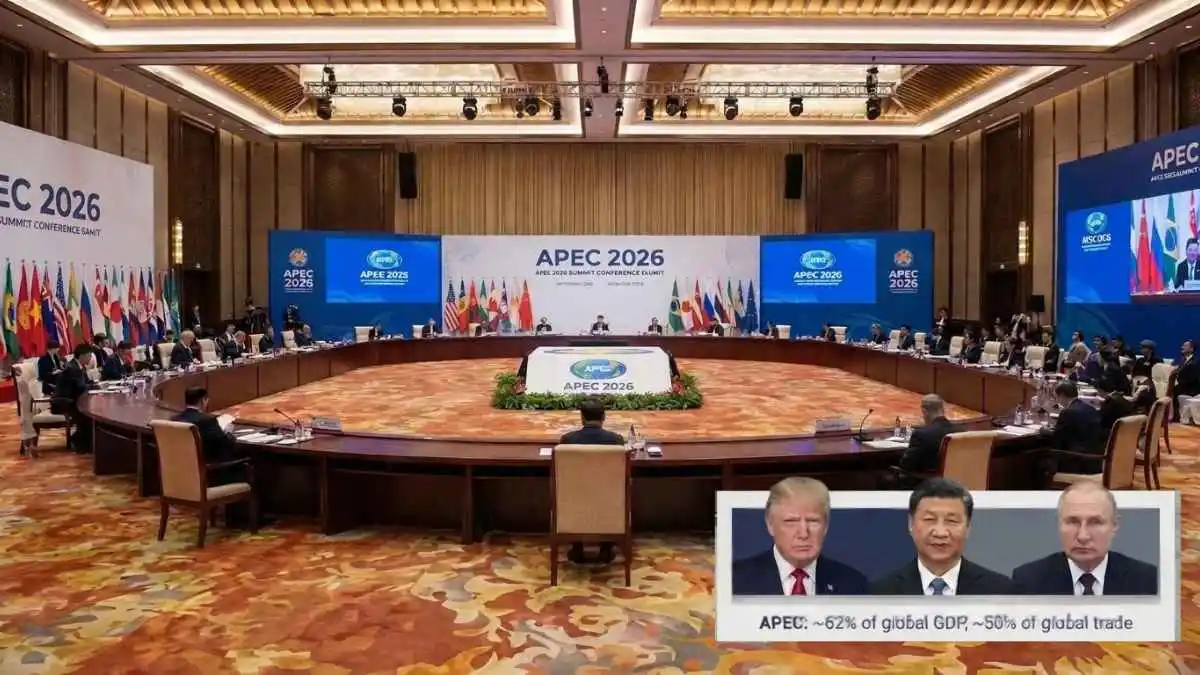
Shifting from reactive bilateral trade truces to high-stakes great-power diplomacy, the 33rd APEC Economic Leaders’ Meeting in Shenzhen (November 18–19, 2026) carries far greater geopolitical weight than the previous standalone Trump Xi meeting.
While the earlier Trump Xi meeting focused narrowly on tariff adjustments, trade, technology, and short-term commercial ceasefires, the Shenzhen summit is expected to bring together three nuclear-armed leaders (Donald Trump, Xi Jinping, and Vladimir Putin) under one roof to navigate active wars, expired arms treaties, and contested technological supply chains.
📌 Executive Brief
- Great-Power Diplomacy: An expected Trump-Xi-Putin trilateral on the sidelines of Shenzhen elevates the forum from a regional trade dialogue to an informal great-power bargaining table on regional conflicts and post-New START nuclear stability.
- Shenzhen’s Tech Leverage: Hosting in China’s premier hardware and AI hub, which generates 3.87 trillion yuan (around $550 billion) in annual GDP, gives Xi Jinping an advantage in setting regional technical standards.
- Diplomatic Cover Over Binding Treaties: Because APEC operates on non-binding consensus rather than enforceable treaties, its true geopolitical value lies in providing high-level diplomatic cover for sideline negotiations that leaders could not easily justify in standalone bilateral visits.
The Strategic Reality: Why Conventional Wisdom Misses the Mark
Mainstream coverage often frames the annual APEC 2026 summit as a routine economic calendar event. However, the structural shift is taking place in Shenzhen. Unlike the previous Trump Xi meeting, which operated within a transactional bilateral framework focused on tariffs, trade, and temporary trade truces, the November 18–19 summit sits at the intersection of active global security crises, shifting it to minilateral diplomacy under the cover of a multilateral economic forum.
By convening in Shenzhen, Beijing transforms a voluntary trade grouping into a stage where global supply chain rules and great-power security red lines are negotiated simultaneously, creating a high-stakes arena where bilateral gridlock is bypassed through direct, leader-level bargaining, leaving smaller allies in Europe and Asia anxious that their security interests could be traded behind closed doors.
| Dimension | Metric / Baseline | Strategic Context | Source |
| Summit Schedule & Chair | November 18–19, 2026 (Sole Chair: China) | 33rd APEC Economic Leaders’ Meeting hosted in Shenzhen | PRC Foreign Ministry |
| APEC Economic Weight | ~62% of Global GDP; ~50% of Global Trade | 21 member economies operating on non-binding, voluntary consensus | APEC / U.S. State Dept |
| Host Hub Scale (Shenzhen) | 3.02Trillion Yuan ($453.4B) GDP; +38.8% 2026 Trade Surge | AI components drove 60% of Shenzhen’s Q1–Q3 2026 trade growth | Shenzhen Statistical Bureau |
| Nuclear Arms Baseline | New START Expired (February 5, 2026) | First major summit following the expiration of U.S.-Russia strategic nuclear caps | Anadolu / Arms Control Monitors |
| APEC 2026 Growth Forecast | 3.2% Regional GDP Growth | Driven by front-loaded exports amid rising tariff and inflation headwinds | APEC Regional Trends Analysis |
The Trilateral Gambit: Ukraine, Iran, and Nuclear Arms
Moscow’s push for a Trump-Xi-Putin trilateral encounter on the sidelines of APEC shatters the narrow economic boundaries of past bilateral US-China summits, linking this three-way dialogue directly to commercial reintegration with hard security bargaining.
For Vladimir Putin, standing alongside Washington and Beijing in Shenzhen could break Western diplomatic isolation and frame the Russia-Ukraine war as a great-power settlement rather than a European security issue.
For Donald Trump, the sideline venue will offer an opportunity to project diplomatic leverage across multiple fronts, while pressing for trilateral nuclear arms control following the February 5, 2026 expiration of the New START treaty.
While Xi Jinping welcomes the optics of hosting both leaders, Chinese officials have resisted formal trilateral nuclear disarmament talks, arguing China’s smaller arsenal cannot be equated with US and Russian stockpiles, and remain wary of alienating European trading partners who insist Europe must have a seat at any Ukraine negotiating table. Even if the encounter yields broad principles rather than formal treaties, its geopolitical symbolism eclipses any standalone bilateral trade truce.
Shenzhen’s Silicon Shield: Home-Court Leverage
Shenzhen’s selection, after hosting prior APEC summits in Shanghai (2001) and Beijing (2014), is a calculated projection of technological sovereignty. As the headquarters of tech and EV giants including Huawei, Tencent, and BYD, Shenzhen recorded 3.87 trillion yuan (around $550 billion) in GDP in 2025, with AI components driving 60% of its surging trade growth through the first three quarters of 2026.
Hosting on this turf gives Xi Jinping an advantage in negotiations with the US, using the Shenzhen backdrop to champion regional AI governance, digital infrastructure standards, and supply chain integration across the Greater Bay Area. By embedding artificial intelligence and advanced manufacturing cooperation directly into the host agenda, China has positioned itself as an indispensable rule-maker in regional tech ecosystems.
Bilateral Gridlock vs. Sideline Leverage
Previous US-China bilateral meetings repeatedly stalled because zero-sum tariff disputes and technology restrictions left neither side room to make unilateral concessions without domestic political backlash. APEC’s institutional structure changes that calculus. Because APEC operates on voluntary, non-binding consensus, leaders are not forced to sign rigid, politically toxic treaties.
Instead, the forum provides low-friction diplomatic cover. Leaders can test compromises on rare earth supply chains, tariff ceilings, and regional connectivity on the margins of a 21-economy gathering. At the same time, the presence of middle-power economies from ASEAN members to Australia, Canada, and South Korea creates collective pressure against total economic isolation, given that intra-regional trade accounts for roughly half of all APEC commerce.
The Forward Horizon: 2026–2027 Strategic Takeaways
For corporate boards and institutional investors, APEC 2026 marks an important event in which geopolitical security bargaining directly shapes commercial risk. Unlike the last Trump Xi meeting, the outcomes in Shenzhen will signal the course for three systemic tail risks, heading into 2027: technological bifurcation in AI and semiconductors, energy and shipping disruptions tied to the regional conflicts, and nuclear instability following the lapse of New START. Any tacit understanding among Washington, Beijing, and Moscow on maritime security, energy flows, or export-control ceilings will dictate capital allocation and supply-chain resilience across the region in 2027.
Read more analysis in our Great Power Economics section.