How Emirates, Turkish Airlines, Etihad, and Qatar Airways Turned Closed Skies Into Billions

⏱️ 6 Mins Read
The world’s most critical airspace closures (Russia, Pakistan-India, and Iran) do not appear on any passenger’s ticket. But right now, these three critical airspace corridors are closed simultaneously, silently transferring billions from struggling carriers to Gulf and Turkish rivals, and passengers are paying for it all.
In This Article
Three Airspace Closures, One Financial Disaster
Russia: Three years. No end date.
Since February 2022, Russia has closed its skies to 36 nations, effectively eliminating the Trans-Siberian corridor, the world’s most efficient long-haul routing connecting Europe to East Asia. For the last three years, a flight from Helsinki to Tokyo that previously took 9.5 hours now requires over 13 hours to navigate the long way around.
The estimated cost of one extra hour of flight time for a wide-body aircraft is around €11,000 or $12,800. European airlines have so far lost €13 billion since the closure of Russian airspace.
India-Pakistan: 14 Months. Both closed Airspace for Each Other
In April 2025, Pakistan and India reciprocally closed their airspace following escalated geopolitical tensions. The fallout was immediate: Air India formally disclosed losses of $2.8 billion over 12 months and was forced to suspend its direct Delhi-Washington DC service entirely.
The airspace closures forced flight detours over the Arabian Sea, adding two to four and a half hours to journey times, causing fuel costs on long-haul routes through the conflict zone to rise by 29%.
Iran: Effectively closed since February 28, 2026.
On February 28, 2026, the United States and Israel struck Iranian military targets. Iran retaliated. The Tehran Flight Information Region is effectively closed to most international commercial flights.
A temporary ceasefire has held since April 2026, but the FAA and European regulators still prohibit their carriers from entering Iranian airspace. Every aircraft entering the region requires individual prior permission from Iranian authorities. Operations are restricted to eight airports and only in daylight hours.
As a result, US airfares have since risen 20.7% in four months, and the Iran conflict and its airspace consequences are explicitly cited as a primary driver.
The Unintended Beneficiaries of Airspace Realignment
This is part of the broader pattern of great power economic competition reshaping global trade routes and creating unintended business winners, and the Gulf and Turkish carriers are the clearest example of who benefits.
Emirates: Geographic Advantage and Record Profitability
Emirates reported a $6.2 billion profit for 2025-26, representing a 7% growth over its consecutive historical gains. This milestone was achieved while the majority of global airlines faced severe financial constraints due to compounding geopolitical tensions.
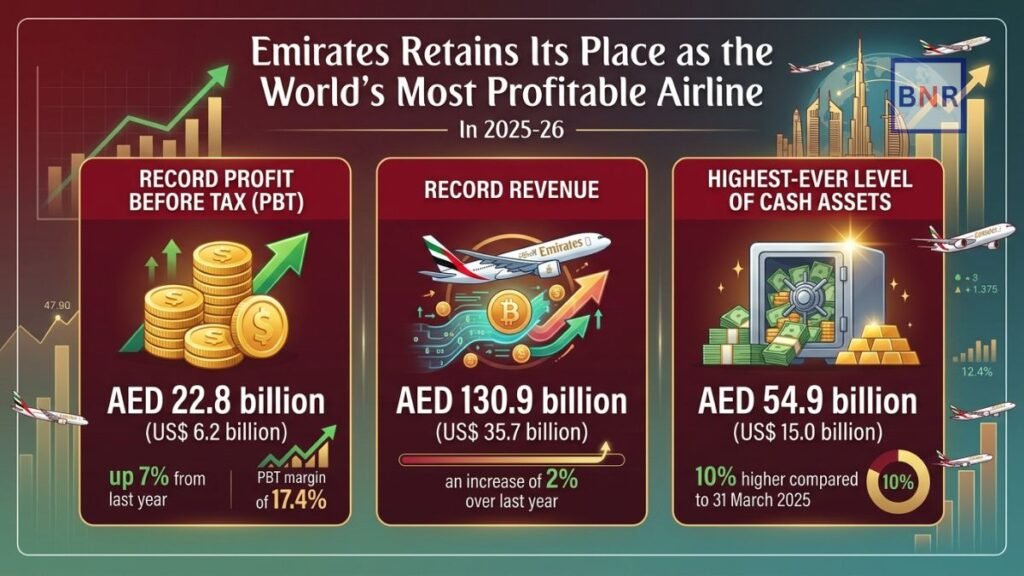
Emirates sits south of the Russia closure, south of the India-Pakistan corridor, and operates its own hub in Dubai, which became the default connection point for Indian passengers who can no longer fly efficiently over Pakistan.
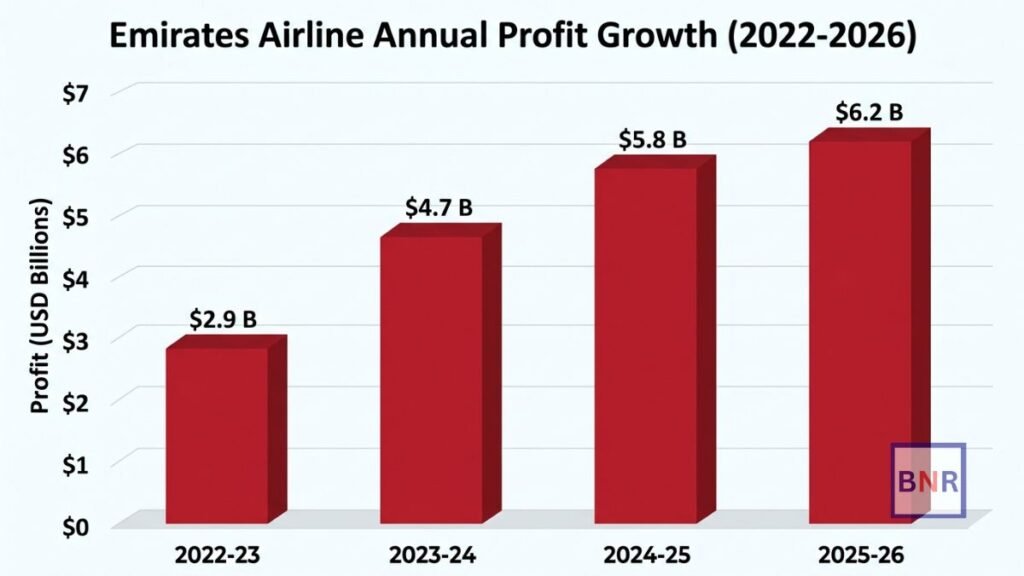
Every Indian business traveler who used to fly Air India direct to London and now connects through Dubai is a passenger Emirates gained by geographic default.
Pakistani airspace closure made Air India structurally uncompetitive on its most important routes. Emirates absorbed the traffic. The financial statements confirm what the geography predicted.
Turkish Airlines: The Accidental Beneficiary
Istanbul sits at a geographic sweet spot that the Russian closure transformed from a competitive advantage to a structural jackpot. Turkish Airlines can still overfly Russia, but its European competitors cannot. On every Europe-Asia route where a German, British, French, or Scandinavian carrier now flies hours longer, Turkish Airlines flies the short way and prices its tickets accordingly. The numbers speak without editorial assistance.
Before the Russian airspace closure in 2021, Turkish Airlines reported a net profit of $959 million. In 2022, the exact year the northern corridors were closed, that figure surged to $2.7 billion. The carrier’s profits then accelerated to a record high of $6 billion in 2023, before stabilizing at an impressive $3.4 billion and $2.2 billion in 2024 and 2025, respectively.
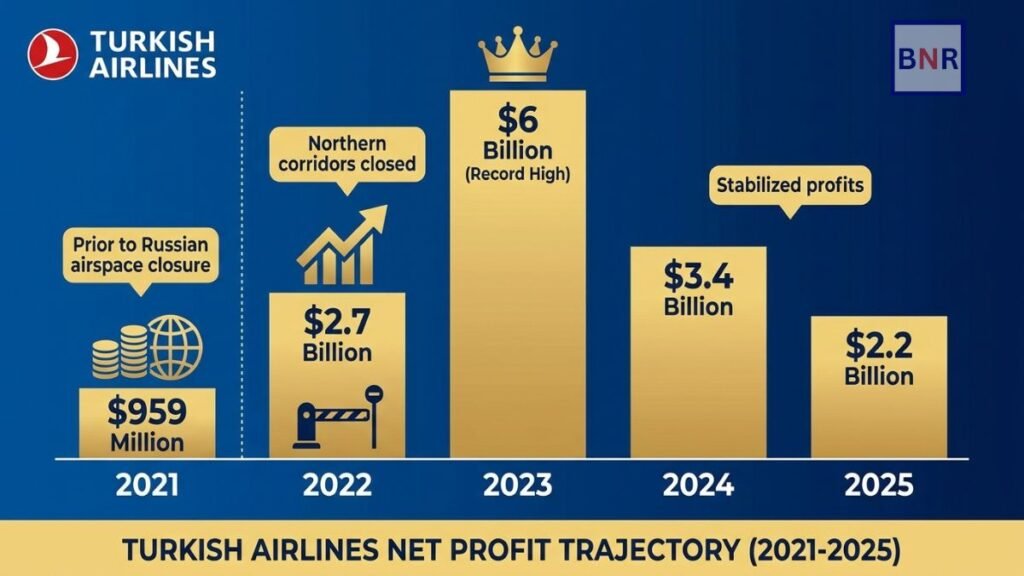
Moreover, the airline has placed orders for 225 aircraft. Istanbul Airport became the leading European airport by daily flight numbers during the same period; its competitors were absorbing Russian closure costs.
Qatar Airways: Strategic Expansion Amidst Regional Disruption
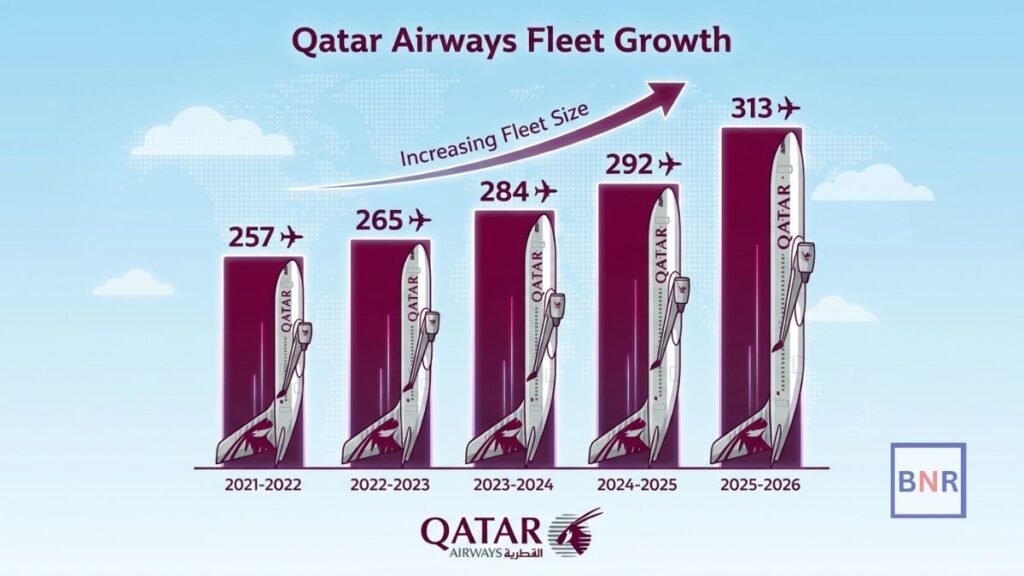
Doha sits in the same beneficiary geography as Dubai. India-Europe traffic that cannot fly efficiently over Pakistan connects through Gulf hubs. Post-Russia Europe-Asia traffic that cannot use northern routes flows south. Qatar Airways reported a $1.94 billion net profit for 2025-26 as compared to $ 2.1 billion reported in 2024-25.
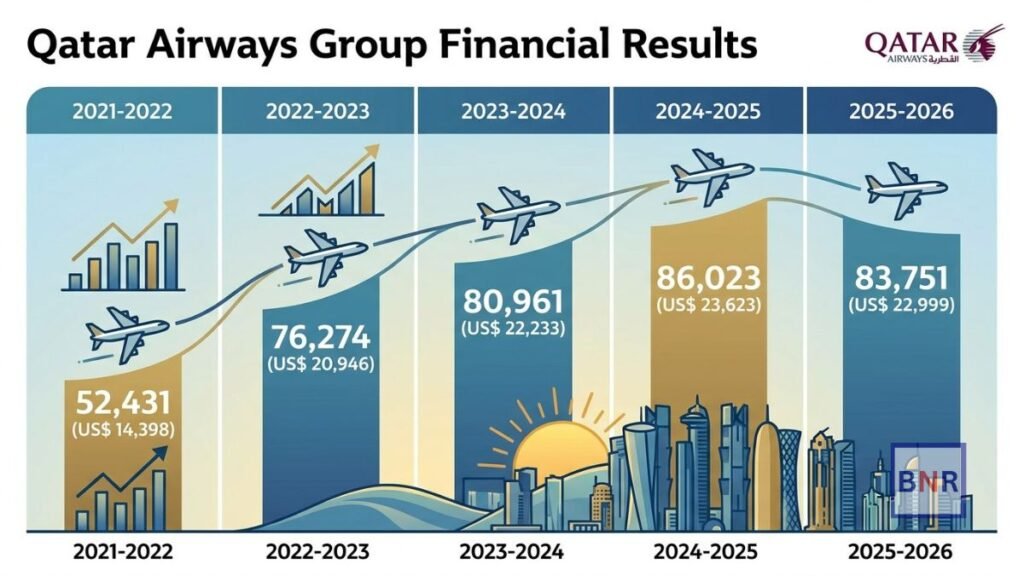
The results demonstrate a robust performance against a final month impacted by significant geopolitical events.
Qatar Airways expanded its capacity aggressively during exactly the period that Air India and IndiGo were operationally handicapped by the Pakistan closure. That is not a coincidence. It is network planning responding to a competitor’s geopolitically imposed disadvantage with the precision that competitive intelligence allows.
Etihad Airways – Another Hidden Beneficiary
Abu Dhabi’s Etihad Airways has also shown strong financial results. The airline has reported a $698 million profit in 2025, showing a remarkable 47% increase compared to $476 million profit reported in 2024.
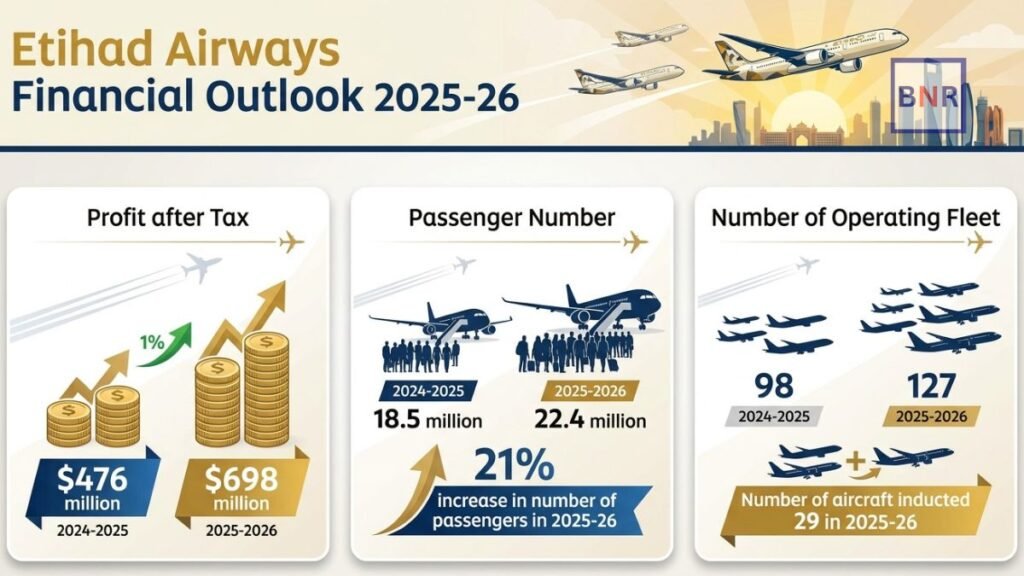
The number of passengers has also increased by 21% from 18.5 million in 2024-25 to 22.4 million in 2025-26. Moreover, the airline has also inducted 29 aircraft into its fleet in 2025-26 with the plan to further expand in China, Southeast Asia, and Europe.
Chinese Carriers: The Unspoken Overflight Advantage
The least reported competitive distortion from the Russia closure carries the largest financial consequence. Lufthansa, Air France, British Airways, and every major European carrier began flying thousands of kilometers longer to reach Chinese cities, while Chinese carriers, including Air China, China Eastern, and China Southern, have maintained Russian overflight rights and continued flying direct through shorter routes.
The Safety Regulator Running Out of Money
The financial chain does not end at airline balance sheets. It travels further than most people would expect.
In May 2026, Australia’s Civil Aviation Safety Authority (CASA) filed its annual budget statement with the Australian government. CASA is projecting a $20.5 million operating deficit for 2026-27. It expects to run deficits through 2029-30.
The document explains why the Middle East conflict is affecting aviation fuel consumption as Australian airlines adjust operations in response to broader aviation market pressures.
Australia is not a party to any of these conflicts. Australian airspace is not closed to anyone. Australian carriers are not directly rerouting around Russia, Pakistan, or Iran.
And yet the financial shockwave from three closed corridors on the other side of the world has traveled through airline economics, through reduced flying, through fuel consumption patterns, to the balance sheet of a safety regulator in Canberra.
The Geography of Winners and Losers
The competitive map being redrawn by simultaneous airspace closures follows a clear geographic logic.
Emirates, Qatar Airways, Turkish Airlines, Etihad Airways, Chinese, and Gulf carriers are broadly positioned south and east of the closed corridors, taking a structural advantage that their competitors cannot neutralize through superior management or operational efficiency. The advantage is geographic. It was handed to them by decisions made in Moscow, Delhi, Islamabad, and Tehran.
However, carriers like Lufthansa, Air France, British Airways, Finnair, SAS, and others, positioned on the north and west corridors have no option but to absorb costs that reduce their competitiveness on the routes, which are most critical to their network strategies.
The disadvantage is equally geographic. It was imposed on them by the same decisions.
Indian airlines are directly and severely affected by airspace closure, not because of Pakistan, which reciprocally closed its airspace in response to the Indian government, leaving no option for Indian airlines but to absorb unprecedented financial shocks during the precise period when India’s aviation sector could have claimed its position as the world’s third-largest aviation market.
This is not a temporary competitive disruption with a market correction on the horizon. It is a structural realignment of global aviation economics, determined not by competition but by geopolitical decisions that neither passengers nor airlines had any vote in and no mechanism to reverse.
Who Bears the Final Surcharge
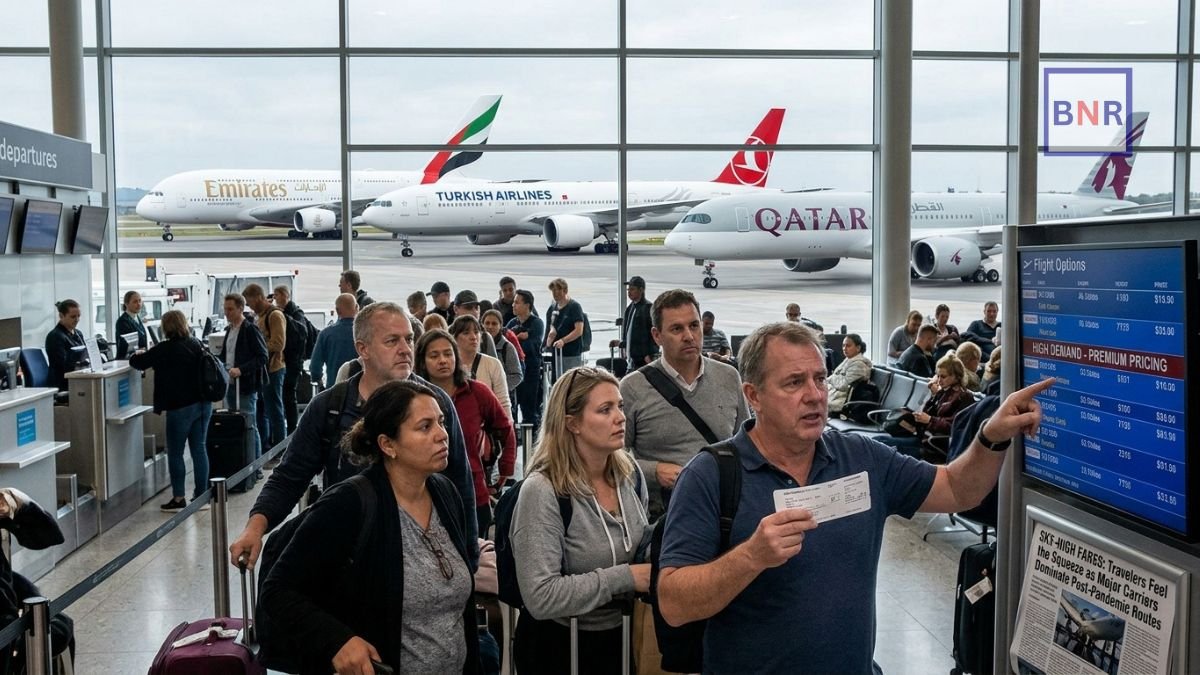
Passengers now face a permanent, structural surcharge on long-haul routes. Carriers like Emirates, Qatar Airways, Etihad, and Turkish Airlines did not cause these geopolitical disruptions; they simply possessed the geographic advantage to absorb the traffic that had nowhere else to go.
Consequently, individual airlines have no economic incentive to dismantle these elevated fares, leaving global consumers to continuously foot the bill for redrawn geopolitical maps.
Read more analysis in our Great Power Economics section.