SP 500 and Nikkei 225 Topped Global Stock Markets Last Week

⏱️ 5.5 Mins Read
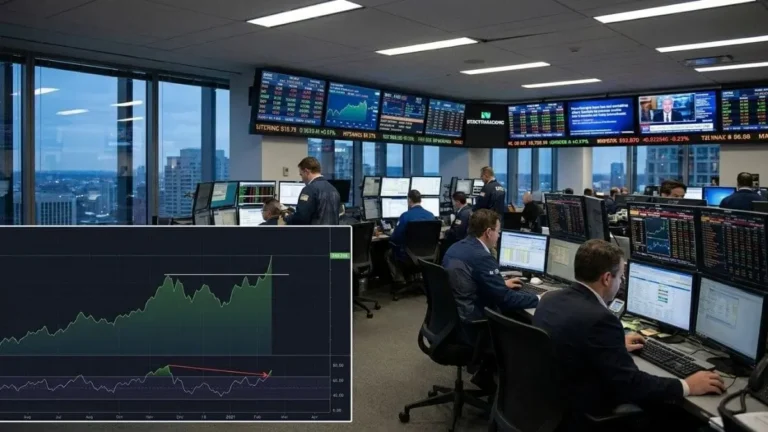
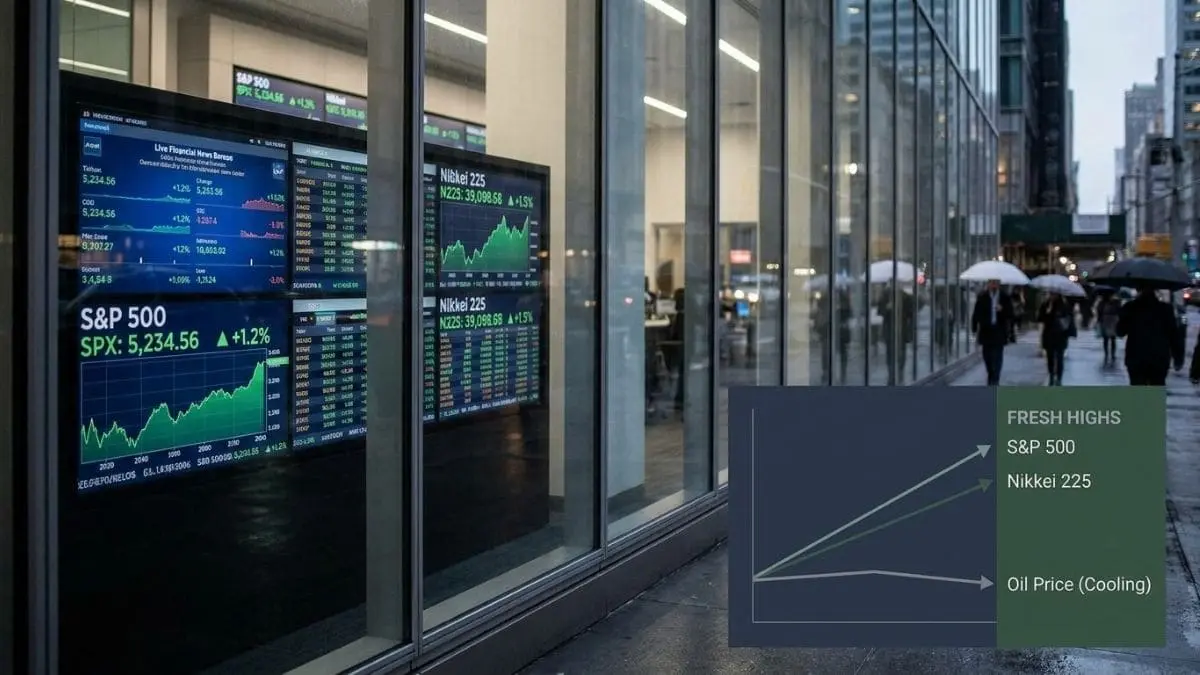
The charts indicate the SP 500 and Japan’s Nikkei 225 stood out from the rest of the share markets last week, ending May 8, 2026. Both stock market charts pushed to fresh highs, showing the strongest chart structures among major global indices.
Both the S&P 500 index and Nikkei 225 index did it against a backdrop of falling oil prices and cautious optimism around a potential US-Iran deal on the Strait of Hormuz. Every other global share index recovered to some degree, but none matched the conviction shown in these two.
SP 500: Record Highs, But Extended
The SPX closed at 7,381, marking a new record high and pushing into the premium zone.
The recovery from the April lows near 6,467 was sharp and nearly vertical, driven by de-escalation hopes and strong tech earnings.
Our technical framework confirms a bullish MSS/BOS, MACD is supportive, and the EMA 200 is below the current price. A pause or a minor pullback toward 6,800-6,900 would be normal before the next leg higher.
The rally is real, but it is partly built on hope. A breakdown in Iran talks would test it quickly.
Nikkei 225: The Sharpest Move of the Week
Japan’s Nikkei 225 at 62,557 made one of the most visually striking moves of the week. After grinding through a choppy February and March and then selling off hard into early April, the Nikkei index launched higher with force from mid-April onward. By early May, it had cleared a key resistance level that had held since March and was pushing toward a weak resistance zone.
MSS/BOS is confirmed bullish. MACD is supportive. The EMA 200 is below the price. But the raw price action on the chart is arguably more aggressive than anything seen in the US or Europe this week. The move came on visible momentum and cleared meaningful structure.
Caution is warranted: recent candles show buyers starting to slow right at the weak resistance zone near 63,120, ultimately settling the index at 62,557. If the Nikkei 225 index cannot push cleanly through 62,500-63,000, some consolidation is the likely next step. But the structure built over the past three weeks is genuinely bullish.
European Indices: Recovered, Not Leading
The DAX index recovered toward 24,400 and is the strongest of the European charts, but it is sitting in the mid-range between support and resistance, where there is no clear edge for either side. The structure is improving, but the DAX performance index is not breaking out.
The Euro Stoxx 50 at 5,924 and the CAC 40 at 8,127 both bounced but carry weaker readings. The CAC40 still has a bear confirmation on MACD, while Euro Stoxx 50 has bull confirmation in MSS/BOS and MACD, but both sit in indecision mode.
The FTSE 100 at 10,243 was the clearest laggard in Europe. Although it is above the EMA 200, the chart has not shown any meaningful structural improvement. The UK stock market continues to be weighed down by elevated energy costs and a weaker domestic picture.
Hang Seng and Nifty: Bounced But Unconfirmed
The Hang Seng Index at 26,374 recovered from its April lows and did manage a break of structure to the upside. But price has pulled back into a retest zone and is sitting below a wide support zone overhead. The HSI index needs to hold this level and push higher to confirm the move. If it gives this back, the chart quickly looks less constructive.
India’s Nifty 50 at 24,197 is the weakest major Asian index this week. It is still well below its prior highs; the price is below the EMA 200. The index is attempting to stabilize around the middle zone but is not showing the momentum that would suggest a sustained recovery. No signal is the honest read here.
KSE 100 index: Holding, Not Moving
The KSE 100 index at 171,315 has stabilized after the sharp February-March decline from the 188,000-192,000 range, but the recovery has been slow rather than clean. Price is holding above the 168,000-169,000 area, which is positive. The EMA 200 is below the current price, also positive. But the MACD is giving a bearish signal; RSI is not confirming.
The market is waiting. The Hormuz situation is directly relevant; higher oil prices mean a heavier import bill for Pakistan, which puts pressure on the current account and eventually filters through to equities. A credible US-Iran agreement would remove a real headwind here.
Oil: Lower, But Not Done
Brent crude at around $101 is still elevated, even after the sharp drops that came when President Trump signaled openness to an Iran deal. Brent had surged well past $110 in prior weeks and fell 7-8 percent in single sessions on peace signals. The chart now shows a market that peaked in early May and is searching for a floor.
The structure is not giving a clean directional read. The oil is caught between the geopolitical premium still in the price and the hope of a resolution that has not yet materialized. Any breakdown in US-Iran talks brings that premium straight back.
Copper Strong, Gold and Silver Quiet
Copper at $6.20 per pound was one of the more constructive commodity charts this week. A break of structure to the upside is visible, MACD and volume are supportive, and the EMA 200 is holding. Copper tracks global growth expectations, particularly from China. The fact that it held up suggests those expectations have not fallen apart.
Silver at $79.56 is trading near the mid-range between support and resistance. MSS/BOS is bullish, but there is no buy signal.
The gold price at $4,712 shows mixed reads across bullish and bearish indicators. Gold benefited from safe-haven demand at the height of Hormuz tensions. A formal de-escalation would soften that support.
US Dollar: Still Weak
The DXY at 98.04 continues to slide. It is well below the 200-day moving average and has been making lower highs since mid-March. The court ruling that struck down Trump’s 10% blanket tariffs added pressure this week, removing a perceived support for the dollar and creating fresh uncertainty around US trade policy.
A softer dollar has helped commodity prices stay supported and offered some relief to emerging market currencies. It is one of the quiet reasons equities in Japan and elsewhere have found it easier to move higher.
Tech Movers: Apple Leads, NVIDIA Recovers, Microsoft Still Lagging
Apple at $292 is the strongest individual stock chart in this review. After the February-March decline, it has cleared its previous lower high, confirmed a BOS, and pushed back into Premium territory. MSS/BOS, MACD, volume, and EMA 200 are all bullish, matching the SPX as the top reading across all charts. Markets appear to be pricing in strong forward momentum ahead of expected AI and product announcements.
NVIDIA at $214.73 has recovered well from the April lows near $164-168. MSS/BOS is confirmed, MACD is supportive, EMA 200 is holding. The stock is pushing toward a weak high around $219. A clean break above that level opens the door to the next leg. Short of that, some consolidation is the more likely path.
Microsoft at $416 remains the weakest of the three. Below the EMA 200 and MACD bearish, the chart reflects no active signal, recalibrating expectations around Microsoft’s near-term earnings delivery and AI spending returns.
Global Stock Markets: Expected Move
The S&P 500 and Nikkei 225 were the clear leaders last week, both structurally strong, both pushing fresh highs, both scoring at the top of the system across all equity charts reviewed. Everything else recovered to varying degrees, but none matched that combination of price action and indicator alignment.
The driver behind all of it was the Strait of Hormuz. The hope of a US-Iran agreement pulled oil lower and gave equities room to breathe. That hope is still just hope. The situation is not resolved. Talks remain fragile, and the ceasefire is uncertain.
Most stock market charts outside the US and Japan are sitting with no active signals. That is a market waiting for confirmation, not one that has made up its mind. Patience remains the right call.
Watch oil and the dollar. If the Hormuz situation formalizes into a deal, the next move would be bullish, and if it doesn’t, the charts will show it first.