Why Gwadar Port Is Important in the US-Iran Conflict

⏱️4 Mins Read
If global logistics experts are curious about why Gwadar Port is important today, the sudden collapse of the Islamabad talks and the subsequent escalation in the Middle East have provided the definitive answer.
When sea routes face imminent closures, Pakistan’s ports, especially Gwadar Port, are now being considered as a vital wartime supply chain alternative.
As ocean freight routes destabilize, Gwadar’s proximity to landlocked Central Asian economies and land-based transit corridors offers global trade planners a rare asset: a reliable bypass around a volatile conflict zone.
The Corridor That Is Already Moving
While diplomats negotiated in Islamabad, something remarkable was quietly happening several hundred kilometers to the south. Pakistan has operationalized a new transit corridor, dispatching its first export shipment of frozen beef via Iran to Uzbekistan.
The shipment will move to Tashkent from Rimdan in Iran, highlighting the potential of the Gabd–Rimdan corridor to strengthen Gwadar’s strategic connectivity and expand access to emerging export markets in Central Asia.
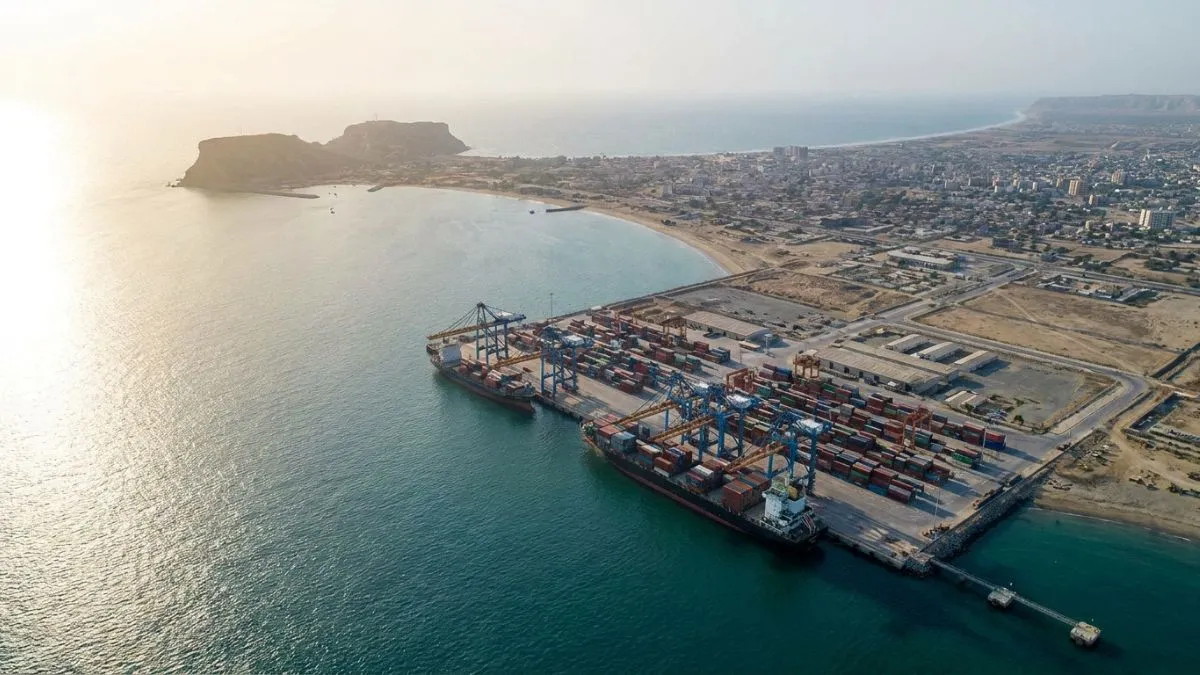
After handling a substantial volume of transshipment consignments at Pakistani ports, Gwadar’s proximity to the international shipping lanes and border crossings is now considered an ideal gateway for trade between South Asia, the Middle East, and Central Asia. By integrating Gwadar into the new trade corridor, Pakistan is strengthening its position as a key player in regional connectivity and logistics.
According to CPEC‘s official framework, the corridor will not only benefit Beijing and Islamabad but also have a positive impact on Iran, Afghanistan, the Central Asian Republics, and the broader region.
This frozen beef shipment is concrete evidence that the land-based trade corridor Islamabad has been discussing for years is now fully operational. Its timing, precisely when Middle East conflict has resumed, signals how Pakistan can leverage its geography.
Gwadar’s proximity to international shipping lanes and border crossings is now considered an essential gateway, not just an alternative for trade between South Asia, the Middle East, and Central Asia. By integrating Gwadar into this corridor, Pakistan is transforming CPEC into a wartime supply chain lifeline.
In this high-stakes environment, Gwadar’s operationalization is no longer just a regional logistics upgrade; it has become a decisive chessboard in the ongoing great power economic competition reshaping global trade.”
From Peace Mediator to Transit Lifeline
For the world, the collapse of the Islamabad peace talks represents a stark geopolitical pivot. As the US and Iran revert to active conflict, the initial perception of Pakistan as a ‘peace state’ has evaporated. However, for nations and multinational corporations navigating disrupted supply chains, Pakistan’s value has fundamentally shifted. The focus is no longer on diplomatic brokering, but on raw, geographical utility.
Pakistani exporters seeking market access, industrialists pitching to foreign investors, and officials from the Special Investment Facilitation Council (SIFC) must now negotiate from a completely different premise: offering a stable, land-based logistical bypass while maritime routes like the Strait of Hormuz face severe existential threats.
The Gulf Capital and the Refinery Shift
The renewed US-Iran conflict has sent a reality check to Pakistan’s energy infrastructure: the Iran-Pakistan gas pipeline is now functionally dead, trapped under the inescapable weight of wartime US sanctions.
Instead, the geopolitical leverage must be redirected entirely toward Gulf capital. Saudi Arabia has already signaled its intent to invest nearly $10 billion in a proposed refinery project in Gwadar.
With the Persian Gulf becoming a high-risk conflict zone, Gulf sovereign wealth funds are urgently seeking secure, proximate geographies to park strategic energy assets.
Islamabad, offering a deep-sea port just outside the immediate choke-points, has become a highly logical destination for this capital flight.
The IMF Dimension in a Conflict Zone
This geopolitical crisis also reshapes Pakistan’s negotiations with the International Monetary Fund (IMF). Currently under a $7 billion Extended Fund Facility (EFF), Pakistan faces severe macroeconomic threats from surging oil prices triggered by the conflict.
However, Western creditors and multilateral institutions are not purely financial actors; they are deeply influenced by Washington’s strategic priorities. A destabilized Pakistan during a massive Middle East war is a nightmare scenario for global security.
Finance Minister Muhammad Aurangzeb and the economic team must leverage this reality, demanding softer debt restructuring terms and uninterrupted bailout disbursements in exchange for maintaining regional stability and securing vital logistics corridors.
What Must Happen Next
The private sector cannot wait for the government to monetize this crisis alone. Pakistani think tanks, chambers of commerce, and trade associations must immediately overhaul their international pitches.
We have seen this blueprint succeed before when nations monetized their geography during crises to build a durable economic identity. Today, Pakistan’s trucks are already moving toward Tashkent, and Riyadh is eyeing a massive refinery in Gwadar.
The world is paying attention to Pakistan’s ports not out of goodwill, but out of absolute necessity. The question now is whether Islamabad possesses the strategic coherence and institutional agility to transform this temporary wartime relevance into a permanent global supply chain integration.
A functioning Pakistan-Iran trade corridor, combined with a revived gas pipeline and an active Gwadar port, would transform CPEC from a bilateral China-Pakistan project into something far more ambitious: a genuine regional trade architecture connecting South Asia, the Persian Gulf, and Central Asia’s landlocked economies through a single integrated corridor.
Read more analysis in our Great Power Economics section.