
Iran Tensions Erase Early Rally Gains; Global Markets Post Worst Quarter in Years

⏱️ 1.5Mins Read
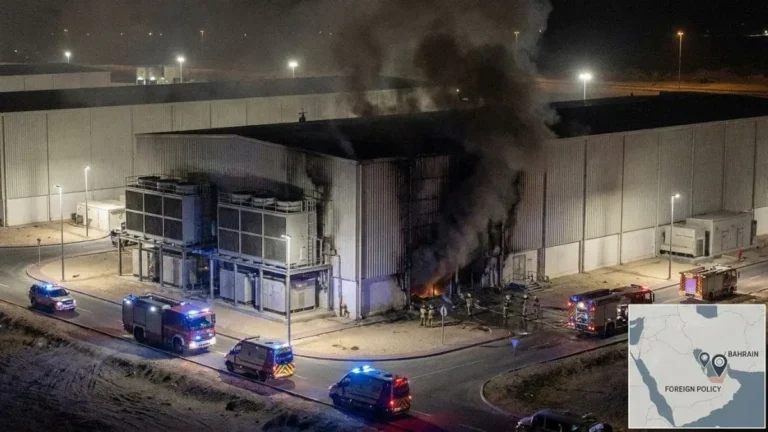
The Q1 2026 stock market crash serves as a textbook case of how geopolitical tensions in the Middle East can instantly erase global market gains.
Brief Relief, Then Reality: Markets Reverse on Trump’s Escalation Warning
Markets posted a sharp two-day rally on Monday and Tuesday after reports of peace talks signaling a potential ceasefire between the US and Iran. However, the hopes of a sustained recovery were crushed after President Trump’s Wednesday national address.
He declared that the United States would strike Iran “extremely hard” within two to three weeks. Consequently, the S&P 500, the Dow Jones Industrial Average, and the tech-heavy Nasdaq closed at session lows.
These market swings are not random volatility; they are the financial system pricing in the great power economic competition between the US and Iran, where each escalation or de-escalation headline carries trillion-dollar consequences for global trade, energy, and technology supply chains.
Index Damage: S&P, Nasdaq, and Dow Log Steep Monthly Losses
March saw a massive selloff as the S&P 500 fell 5.09 percent while the Nasdaq Composite declined 4.75% in the same period.
Quarterly losses were equally severe. The S&P 500 dropped 4.6%, and the Nasdaq declined 7.1% over the first quarter, while the Dow Jones posted a 5.4% decline in March alone.
Oil’s Historic Surge Ripples across Global Commodities
Energy markets reflected the serious impact of the Middle East conflict. Brent crude, the international oil benchmark, surged more than 60% over the past month, the largest four-week percentage increase ever recorded, triggering a chain reaction across commodities, including natural gas, soft commodities, and industrial metals globally.
Asian and European Markets Hit Multi-Year Lows
The damage was not confined to Wall Street. Japan’s Nikkei 225 recorded its worst four-week performance since 2008, while Europe’s Stoxx 600 index posted its steepest decline since 2022, reflecting the breadth of global investor anxiety over an unresolved Middle East conflict.
The Long-Term Threat Behind the 2026 Stock Market Crash
Analysts at Bespoke Investment Group warned that equity markets have become unusually sensitive to oil price movements. “Stocks have been following the lead of oil prices at an unprecedented rate over the last several weeks,” the firm noted, adding that if the US were to disengage while the Strait of Hormuz remained blockaded, energy markets would stay severely supply-constrained, prolonging the pressure on the global economy and stock prices alike.
Market direction is expected to be driven primarily by the Middle East conflict. Analysts anticipate a sharp market sell-off, with Brent crude potentially breaching the $110 per barrel threshold after the confirmation of military escalation. Likewise, any credible signal of a ceasefire or de-escalation from either Washington or Tehran could trigger a significant relief rally across global indices.
Read more analysis in our Great Power Economics section.